Editorial policy

What Boost.cards will and will not publish. How we source claims, handle vendor relationships, and correct errors.

Editorial policyLast verified 2026-09-22Updated
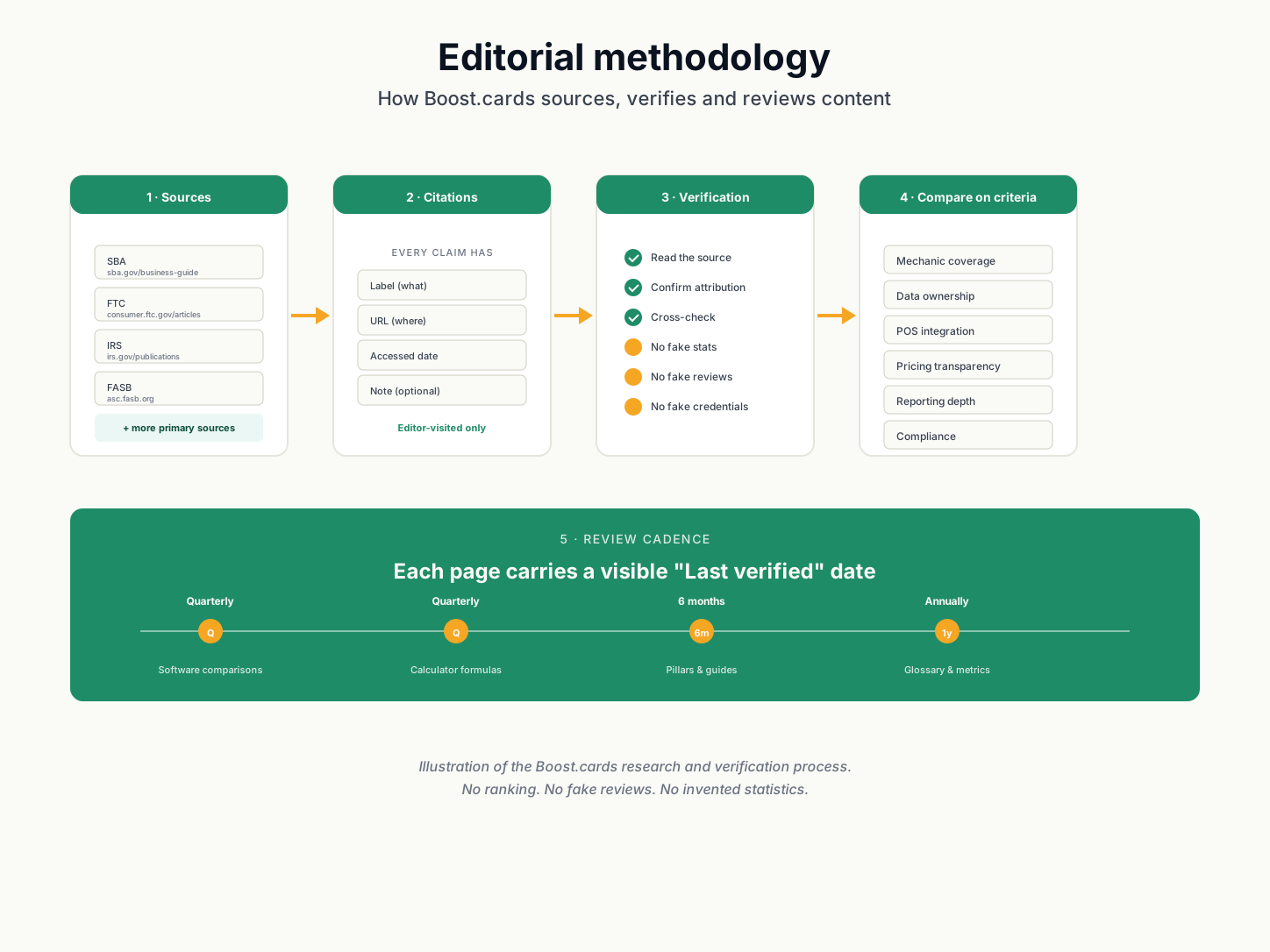
Illustration of Boost.cards research methodology with source documents, citations, verification, comparison criteria and update checks.
Illustration of Boost Cards editorial verification practices.

What we will not publish

We will not publish fabricated statistics, invented citations, fake customer counts, fake testimonials, fake partner logos, fake author credentials or any claim whose source we cannot name.

If we cannot cite a primary source, we either say "illustrative" or we omit the claim.

What counts as a source

Primary sources: regulator websites, standards bodies, vendor documentation, public company filings, published research papers. A primary source is something the original author has published and the public can verify.

Secondary sources: well-known industry publications. We cite these by name; we do not use them as a substitute for a primary source if one exists.

Vendor relationships

We do not accept payment to publish a positive review. If a vendor relationship exists — affiliate, referral, sponsored placement — we disclose it on the relevant page and on the affiliate disclosure.

The presence of an affiliate link does not change our evaluation framework. Our editorial evaluation stands independently of commercial arrangements.

Updates and corrections

When content is updated materially, we change the visible updated date. When we find an error, we correct it and add a note in the visible change log if the correction is significant.

If you spot an error, please contact the editorial team using the contact page. Substantive corrections will be acknowledged.

Authorship

Content on Boost.cards is published by the Boost Cards editorial team. We do not invent individual author bylines for credibility. Where content reflects specific subject-matter expertise, the contributor is named.