Software comparison
Gift card platforms
Issuance, distribution, breakage accounting, reconciliation and consumer-protection compliance. The evaluation framework for picking a gift card platform honestly.
Quick answer
Pick a gift card platform by your operating model. Standalone SaaS for chains and seasonality. POS-integrated for single-POS environments. Ecommerce-first for online retailers. Verify reconciliation and rules matrix; do not trust feature lists.
Editorial note
We list vendor categories and what to look for — not reviews. This is a decision framework. Confirm consumer-protection rules against the latest guidance from your local regulator and your accountant.
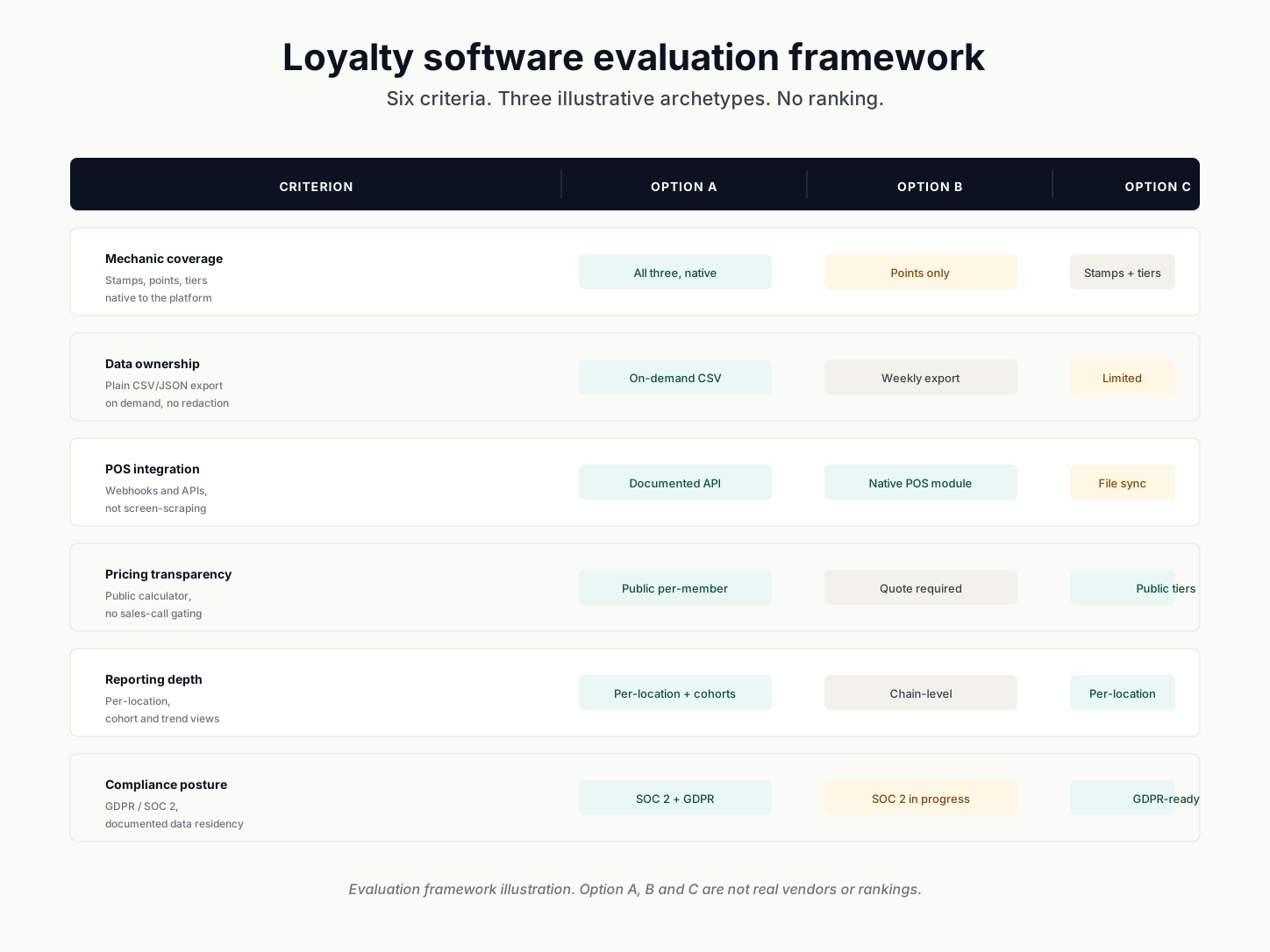
Evaluation criteria
What to compare, before you compare vendors
Use this list to weigh any vendor short-list. Adapt weights to your business model.
Issuance methods
high importanceEmail-delivered, link-delivered, physical plastic, and pick-up-from-till. The more channels, the higher the gross gift-card sales — but each channel costs something.
Processing fees
high importanceCombined gateway + platform fee, typically 1.5–3.5%. Anything above ~4% is paying for marketing services you probably do not need.
Reconciliation model
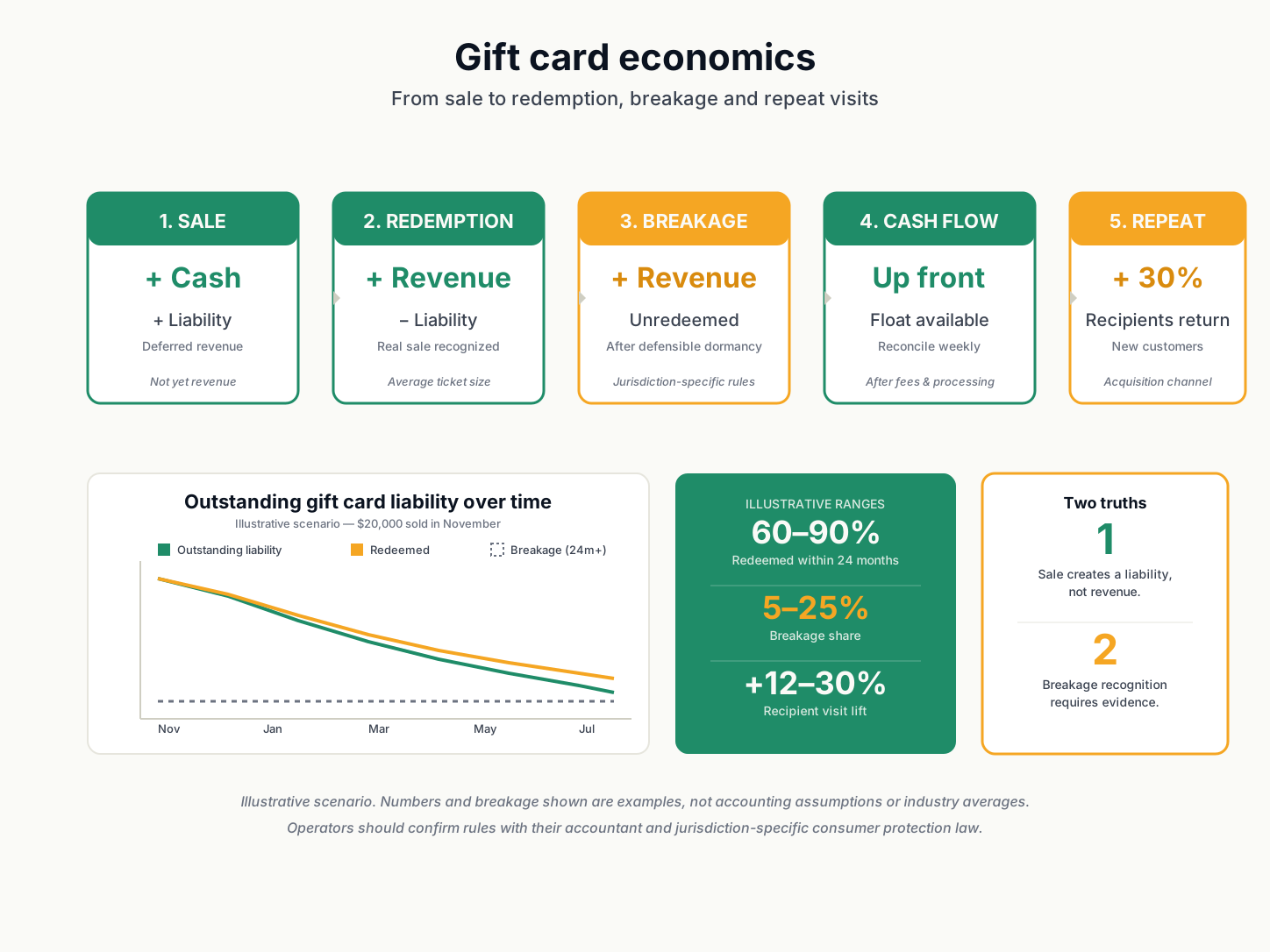
high importanceReal-time GL entries, not end-of-day file dumps. The platform must reconcile sales, redemption, breakage and outstanding liability on a schedule that matches your accountant.
Consumer-protection features
high importanceCard expiry controls, dormancy-fee compliance for the jurisdictions you serve, and disclosure language. Verify the vendor maintains a current rules matrix.
Distribution channels
medium importanceSell at till, sell online, sell through third-party marketplaces (e.g. grocery, drug stores). Multi-channel usually drives incremental 20–40% of card volume.
POS integration
high importanceReal time balance check, real time redemption posting, automatic liability reconciliation. Anything that requires batch uploads at end of day usually breaks within months.
Refund / dispute handling
medium importanceDocumented process for lost cards, stolen cards, refunds-to-original-payment, charge-backs. Read the policy yourself before signing.
Vendor archetypes
The kinds of vendors you will find, and where they fit
Archetypes are descriptive categories, not endorsements. Each archetype has trade-offs — read the criteria above first.
Dedicated gift-card platforms
Pure-play gift card issuance, distribution and reconciliation. Often the best fit for businesses whose loyalty program is already paper or absent.
Standalone SaaS
Subscription priced; you own the program. Best for medium-to-large operators who want full control and predictable fees.
White-label marketplace
Cards hosted by the vendor and sold through their discovery channels. Lower marketing effort, lower margin, less brand control.
Best for: Businesses with strong seasonality (e.g. retail) · Multi-location operators
POS-integrated gift card
Gift card software sold by your POS vendor as an add-on. Convenient but often limited on multi-channel distribution.
POS-native module
Add-on to your existing POS vendor. Cheap to set up; limited outside the POS ecosystem.
Multi-POS gateway
Vendor bridges multiple POS providers. Higher cost, better fit for chains running mixed POS environments.
Best for: Single-POS-environment businesses · Operators prioritizing speed-to-launch
Ecommerce-first platforms
Digital-only gift cards optimized for online checkout. Weak on in-store distribution but strong on demand-generation widgets.
Ecommerce plugin
Plug into Shopify, WooCommerce or BigCommerce. Best for online-first retailers; weak for bricks-and-mortar.
Email-delivery SaaS
Buy a card, receive a code by email. Common add-on for hospitality and small restaurants.
Best for: Online retailers · Hospitality and restaurants
Tools and pillars
Pair this with the calculators and the format-free pillars
A software decision is only one part. Run the numbers, then short-list vendors.