Pillar guide

Gift cards

How gift cards work, when they make economic sense, and the accounting rules small businesses must follow when they accept or sell them.

6 sectionsLast verified 2026-09-22Updated

Quick answer

A gift card is recorded as a liability at sale and becomes revenue when redeemed or recognized as breakage. Industry-typical small business programs see 60–90% redemption within two years and 5–25% breakage, while driving 12–30% repeat-visit uplift among recipients.

Illustrative numbers

60–90%

redemption within 24 months

5–25%

breakage share

12–30%

incremental visit lift among recipients

What a gift card actually is

A gift card is pre-paid store credit that the recipient can spend at the issuing business. From the business's side it is a liability (you owe the holder the value) that becomes revenue only when it is redeemed.

The moment a customer pays you $100 for a gift card, your bank account goes up by $100, but your revenue does not — under U.S. GAAP and most other accounting frameworks, gift card sales are recorded as a liability (deferred revenue) until the card is redeemed. Only then does it flow through your income statement.

This accounting treatment is what creates "breakage" — the value on cards that are never redeemed. Once you have a defensible expectation that a card balance will never be redeemed, you can recognize that amount as revenue. In most U.S. jurisdictions that expectation typically requires evidence such as long dormancy periods and historical redemption patterns.

What this means in practice

  • Treat gift card sales as liabilities. maintain a separate GL line for outstanding gift card balances and reconcile it monthly against your system of record. Skipping this is the single most common compliance mistake.
  • Never spend the float. resist the temptation to treat the float as operating cash; once it leaves, redeeming requires out-of-pocket funds.
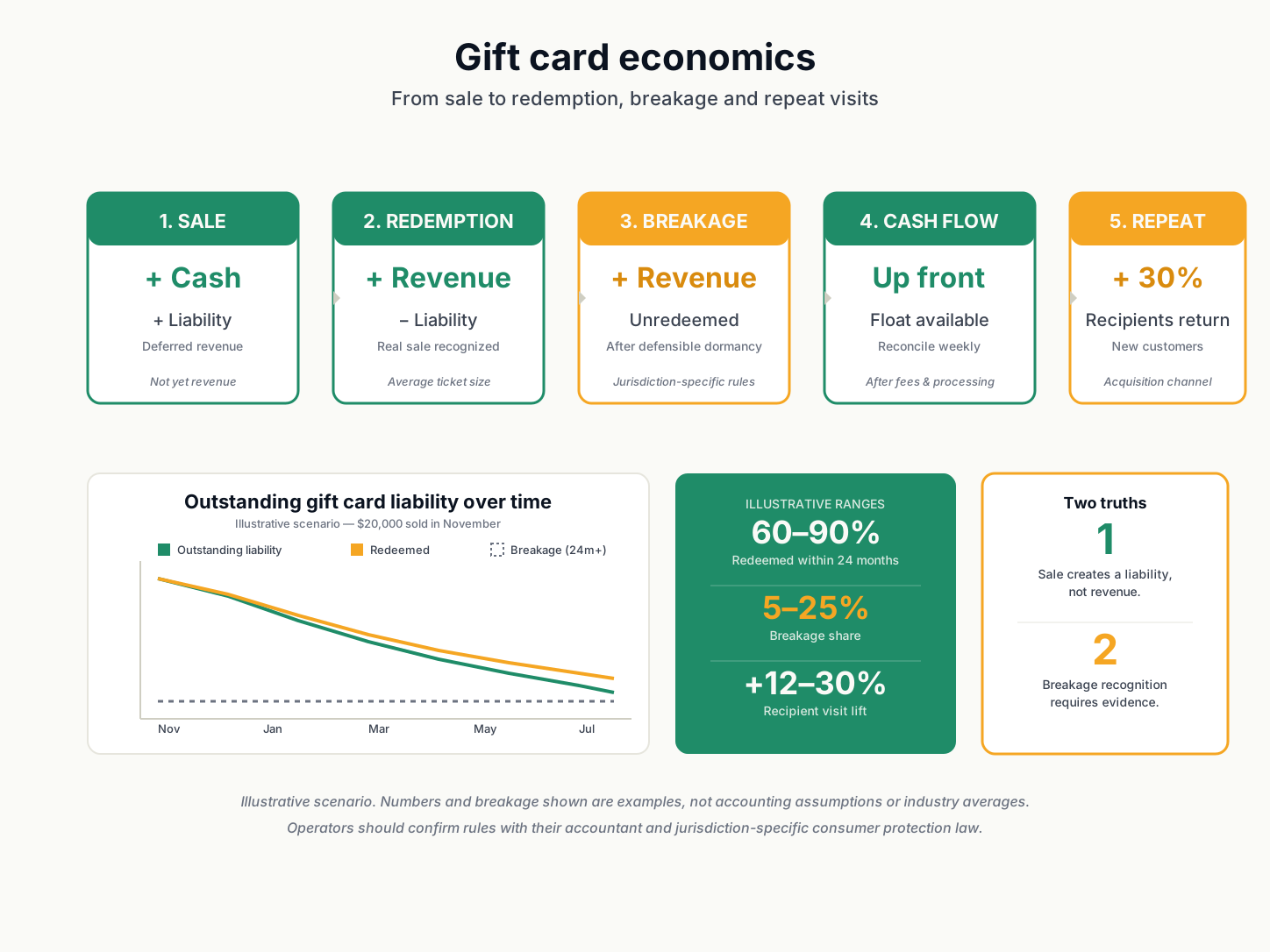
Gift card economics infographic showing sale, liability, redemption, breakage, cash flow and repeat-visit impact.
Illustrative gift-card scenario only. Values and breakage shown are examples, not accounting assumptions or industry averages.

The economics

A gift card is a customer-acquisition tool that costs you 0–3% in processing fees per card sold, drives an average 12–30% lift in repeat visits among recipients, and converts a portion of the float into long-term retained revenue.

The three numbers that matter most: redemption rate, breakage rate, and incremental visit rate. Industry-typical retailer gift card redemption rates range from 60–90% within two years, breakage from 5–25% depending on program design, and incremental visits per recipient from 1.0 to 1.8. Together these define the net contribution of a gift card program.

Worked example

A bakery sells $20,000 of gift cards in December

Cards sold
$20,000 liability
Processing fees (~2.5%)
−$500
Redeemed within 12 months (75%)
$15,000 revenue
Breakage recognized after 24 months dormancy (10%)
$2,000 revenue
Average tickets per recipient
1.4
New-customer share among recipients
~25%

Numbers are illustrative. Processing fees, breakage rules and dormancy periods vary by jurisdiction.

Sources

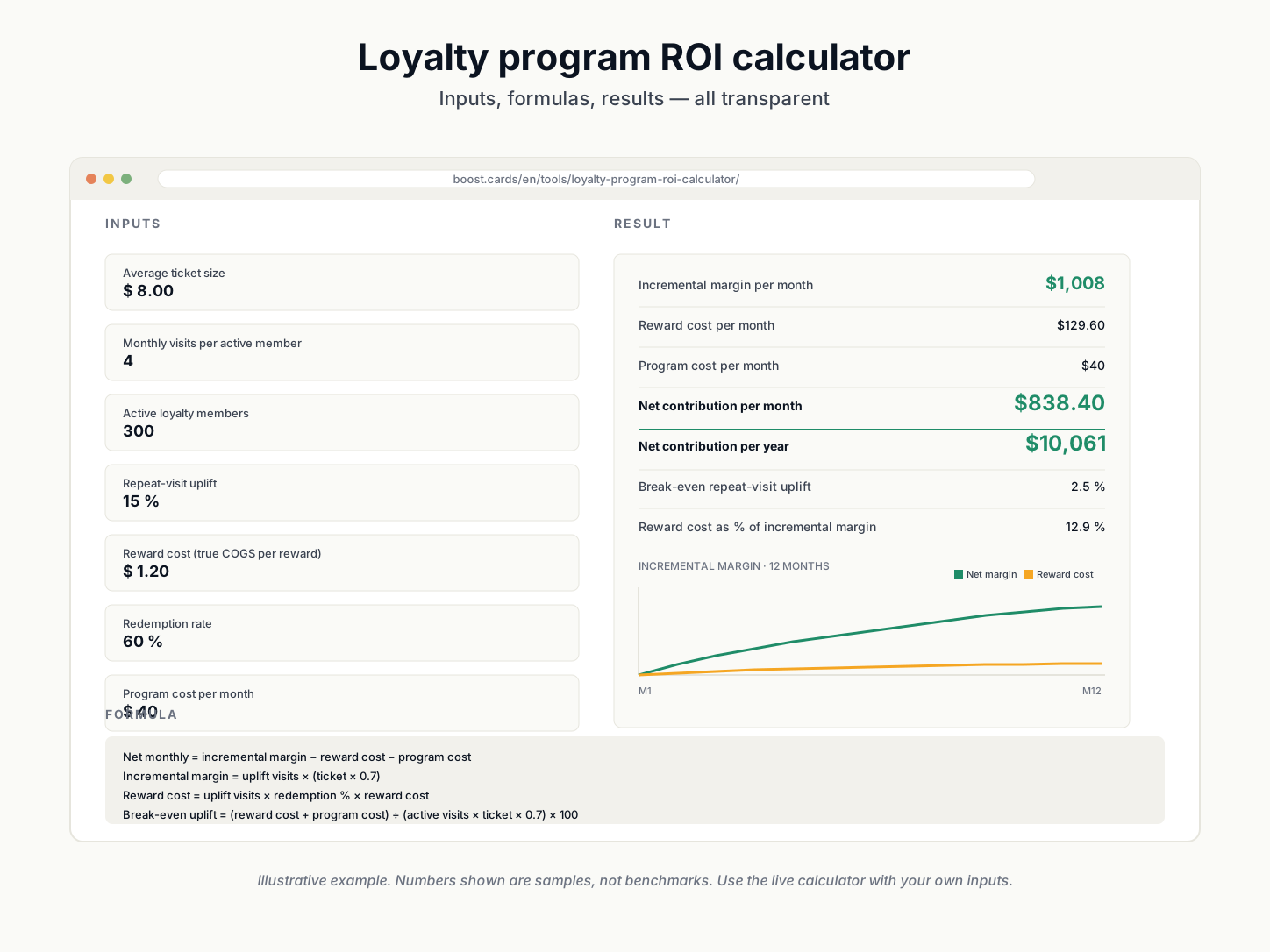
Illustrated loyalty-program ROI calculator with inputs, net contribution, break-even result and an incremental-revenue chart.
Illustrative calculator interface; all values shown are examples and should not be treated as expected results.

Physical vs digital gift cards

Physical gift cards (PVC cards on a rack) sell well in-store and at retail partners but cost more to produce and reconcile. Digital gift cards are delivered by email or link, cost almost nothing to issue, and convert higher because recipients receive them in seconds.

For most small businesses under ~10 locations, digital gift cards are the better default. The marginal cost of issuing a digital card is essentially zero, settlement is automated, and there is no inventory write-off if a card design changes. Many modern platforms ship email-delivered cards with full reconciliation out of the box.

A physical card still has a place — at retail partners, on a rack at the till for impulse purchases, and as a tangible take-home during the holiday season. The clean operational default is digital; physical is the marketing layer.

Compliance and consumer protection

In the U.S., gift cards are governed by the Credit CARD Act's gift card provisions (no expiration within 5 years, no dormancy fees except in limited cases). In the EU/UK, consumer-credit style rules apply. Local rules differ — operators should consult a qualified accountant and the relevant consumer protection agency for their jurisdiction.

This is editorial guidance, not legal advice. The cited rules below are starting points only. Always confirm against current guidance from your local regulator.

Sources

Designing a gift card program

A well-designed gift card program optimizes for velocity, redemption friction and recipient re-engagement. Three levers matter: card value (offer denominations, allow custom amounts), redemption friction (one-tap at POS, transparent balance), and reminder cadence (expiry reminder, low-balance reminder) where legally permitted.

Avoid gimmicks that confuse recipients. A clean, predictable card that works the way the recipient expects is worth more than a creative but quirky mechanic.

When gift cards are not the right answer

Gift cards are a poor fit when the business is in steep decline (recipients avoid sending gift cards to closed businesses), when the business is brand-new and lacks trust (gift cards of unknown brands rarely sell), or when the operator lacks the bookkeeping maturity to manage the liability.

A gift card program is an obligation, not a marketing tactic. If you cannot reliably reconcile the liability and handle refunds, do not start one.