Bakeries template
Bakery loyalty card
Bakeries have high visit frequency and small tickets — perfect for paper-friendly stamp cards. The holiday season is your biggest spike; pair the loyalty card with a high-margin gift card push.
Stamps to reward
10
Quick-trip-friendly rewards hit hardest.
Typical payoff
~2 weeks
At 5–7 visits per week for morning regulars.
Reward cost
6–8%
Holiday gift cards are a separate lever.
Loyalty card
Hearth & Crumb
Baked fresh every morning
Free pastry or loaf of bread
Collect 10 visits, get Free pastry or loaf of bread.
Sample preview — every field is editable in the builder.
What to have ready before you customize
A loyalty card that runs at the till has to be designed around the real numbers, not the ones you wish you had. Before you start editing this bakeries template, gather:
- Your average ticket size (bakery tickets are small — keep the reward math tight).
- A quick-trip-friendly reward (free pastry, free loaf) — payoff within 2–3 weeks.
- Multi-location strategy — one shared program, not separate cards per location.
- A holiday gift card push (November–December is the bakery gift card spike).
- Join-rate tracking at launch (5–15% of monthly customers is typical).
Why this works for bakeries
The stamp card fits the till and the customer's wallet. Bakers selling at multiple locations need one shared program, not separate cards. Holiday gift cards are huge for bakeries — the stamp card primes the customer relationship that the gift card monetizes.
How to customize it
- Pick a quick-trip-friendly reward (free pastry, free loaf) so customers see the payoff within 2–3 weeks.
- If you sell at multiple locations, design a shared card — separate programs undercut the chain.
- Pair with a holiday gift card push (November–December is the bakery gift card spike).
- Track join rate at launch; bakeries typically reach 5–15% signup of monthly customers within the launch quarter.
Run the numbers first
Before you print the cards, run the bakeries loyalty math through the loyalty ROI calculator with your real ticket size, repeat frequency and reward cost. The calculator publishes its formulas — you can verify the math, not just trust it.
Read the full guide
The full Bakeries loyalty program guide walks through mechanic choice, reward sizing, the till experience, common pitfalls and how to measure whether the program is working. Read the bakeries guide →
Bakeries loyalty card FAQ
The questions we hear most about running a bakeries loyalty card. If yours isn’t here, send it over — we add new questions from readers every month.
How do I handle multiple bakery locations?
One shared program, one shared card. Customers move between locations (one for the morning commute, one for the weekend run). Separate programs undercut the chain and confuse the customer.
What reward works best for bakeries?
A free pastry or free loaf. These are quick-trip-friendly (payoff in 2–3 weeks), have high perceived value, and cost the bakery less than the menu price. Avoid cash-equivalent rewards.
When does the gift card become more important than the stamp card?
November and December. The stamp card primes the customer relationship that the gift card monetizes — customers who use the stamp card are twice as likely to buy a gift card. Run the stamp card year-round and time the gift card push for late November.
How long should a bakery stamp card take to fill?
2–3 weeks for the morning regular segment. If your cards are taking 6+ weeks to fill, the stamp count is too high — drop from 10 to 8.
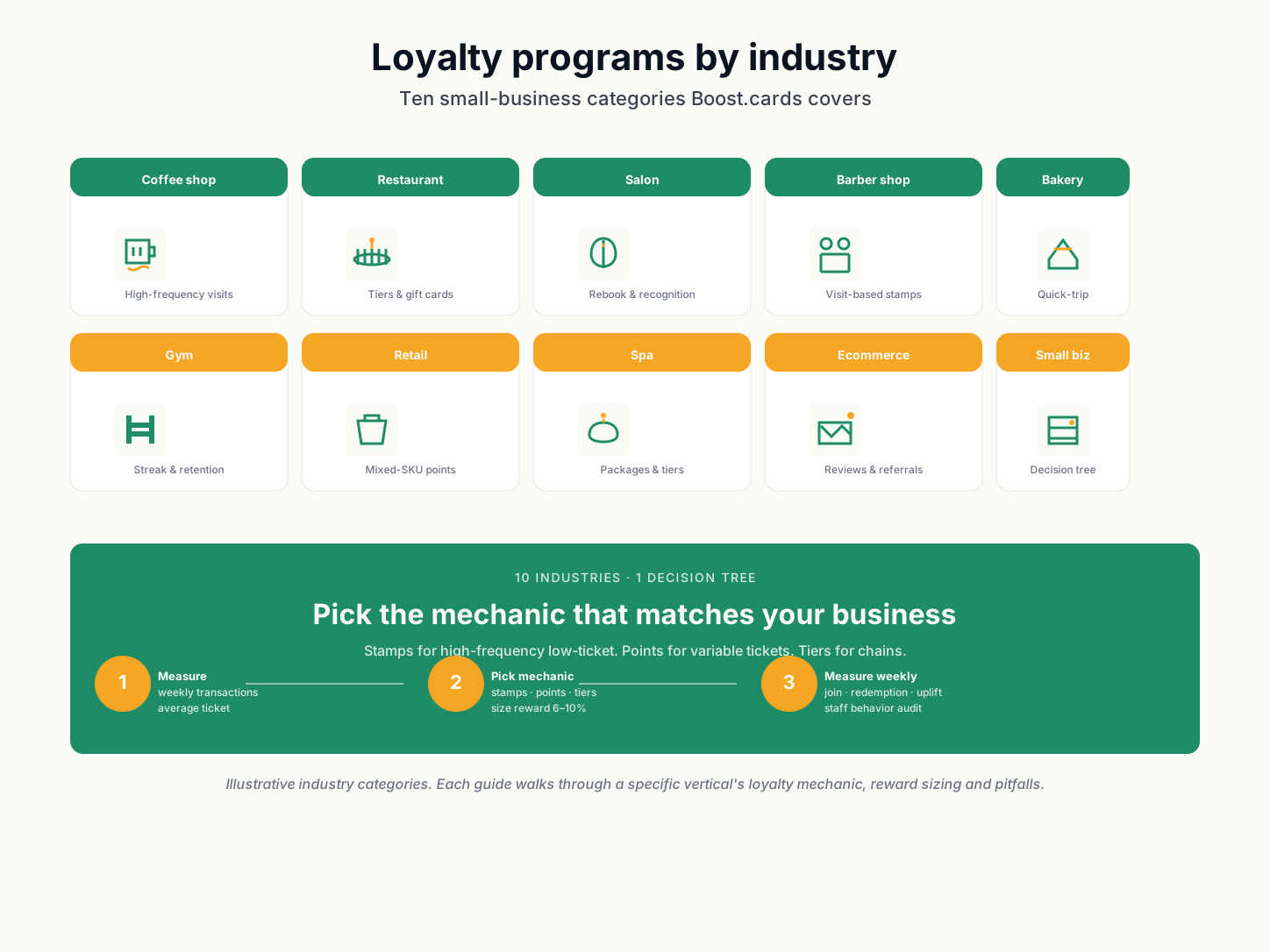
Related templates
All templates →Coffee shops
Coffee shop loyalty card
A 10-stamp coffee card is the original loyalty mechanic for a reason — high visit frequency, low ticket size, simple math.
Use template →
Restaurants
Restaurant loyalty card
Visit-based restaurant cards work because the visit cadence is predictable and the reward is a high-margin item the kitchen can fulfill without losing the night.
Use template →
Small businesses
Small business loyalty card
For small businesses that don't fit a single vertical, pick by three numbers: ticket size, repeat-visit frequency, and reward cost. The decision tree is short — there's usually one right answer.
Use template →