Small businesses template
Small business loyalty card
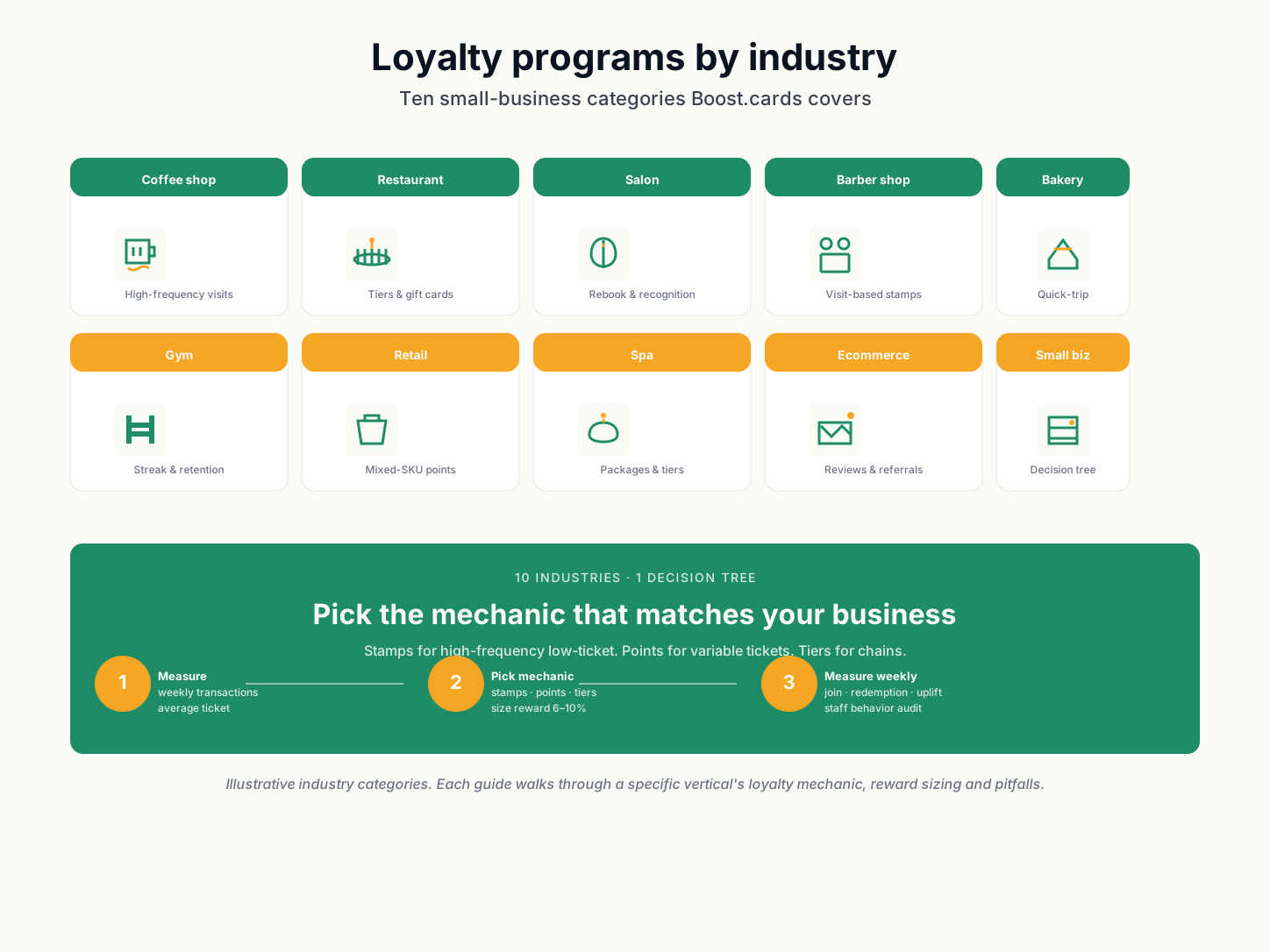
For small businesses that don't fit a single vertical, pick by three numbers: ticket size, repeat-visit frequency, and reward cost. The decision tree is short — there's usually one right answer.
Pick by numbers
3 metrics
Ticket size · frequency · reward cost.
Mechanic
Stamps OR points
Decision tree is short.
Health range
6–10%
Of cumulative spend on rewards.
Loyalty card
Small business
Loyalty card
Free item or upgrade
Collect 10 visits, get Free item or upgrade.
Sample preview — every field is editable in the builder.
What to have ready before you customize
A loyalty card that runs at the till has to be designed around the real numbers, not the ones you wish you had. Before you start editing this small businesses template, gather:
- Your average ticket size (sets the mechanic — under $15 stamps, over $50 points).
- Your repeat-visit frequency (sets the stamp count).
- The true cost of fulfillment for the reward (not the menu price).
- A channel choice — paper for cost, wallet pass for digital, app only if your customer mix demands it.
- Three KPIs to track weekly — join rate, redemption rate, repeat-visit uplift.
Why this works for small businesses
Small businesses have the operating reality the program has to fit. Pick the mechanic by your numbers, not by your competitor's choice. The till is the moment of truth — if the staff can't process a stamp in 5 seconds, the program fails no matter how clever the design.
How to customize it
- Pick your mechanic by ticket size: < $15 → stamps; > $50 → points; tiered if you have a clear VIP segment.
- Pick your reward math: aim for 6–10% of cumulative spend; below 4% feels stingy, above 12% loses money.
- Pick your channel: paper for cost, wallet pass for digital, app only if your customer mix demands it.
- Track three KPIs weekly — join rate, redemption rate, repeat-visit uplift — and review quarterly.
Run the numbers first
Before you print the cards, run the small businesses loyalty math through the loyalty ROI calculator with your real ticket size, repeat frequency and reward cost. The calculator publishes its formulas — you can verify the math, not just trust it.
Read the full guide
The full Small businesses loyalty program guide walks through mechanic choice, reward sizing, the till experience, common pitfalls and how to measure whether the program is working. Read the small businesses guide →
Small businesses loyalty card FAQ
The questions we hear most about running a small businesses loyalty card. If yours isn’t here, send it over — we add new questions from readers every month.
How do I pick the right mechanic for my business?
By three numbers: average ticket size, repeat-visit frequency, and reward cost. Under $15 tickets + high frequency → stamps. Over $50 tickets + low frequency → points. Tiered if you have a clear VIP segment.
What is the right reward cost?
6–10% of cumulative spend is the healthy range. Below 4% feels stingy and the customer doesn't notice the program. Above 12% you're losing money faster than you're building retention.
Paper, digital, or app?
Paper for cost (under 50¢ per card). Digital wallet pass for engagement (customers don't lose it). App only if your customer mix demands it — most small businesses are better served by paper or wallet pass.
How do I measure success?
Three numbers, weekly: (1) join rate (% of monthly customers who enrolled), (2) redemption rate (% of issued rewards that get redeemed), (3) repeat-visit uplift (visits per active member vs. pre-launch baseline). The program is working if all three are trending in the right direction at 90 days.
Related templates
All templates →Coffee shops
Coffee shop loyalty card
A 10-stamp coffee card is the original loyalty mechanic for a reason — high visit frequency, low ticket size, simple math.
Use template →
Restaurants
Restaurant loyalty card
Visit-based restaurant cards work because the visit cadence is predictable and the reward is a high-margin item the kitchen can fulfill without losing the night.
Use template →
Retail stores
Retail loyalty card
For multi-SKU retail, points-based programs handle the catalog naturally. Channel-aware rewards (in-store + online + app) differentiate your program from competitors.
Use template →