Small business guide

Small business loyalty program

Industry-agnostic decision tree for choosing the right loyalty mechanic based on weekly transactions, average ticket and contribution margin.

6 min readLast verified 2026-09-22Updated

Quick answer

Pick the mechanic from weekly transactions, average ticket and margin. Stamp cards for high-frequency low-ticket; points for variable tickets; tiers for chains. Reward cost should be 6–10% of cumulative spend. Measure weekly.

Pick by three numbers

Three inputs determine the right mechanic: weekly transactions, average ticket, and contribution margin. The right mechanic is the one that maps cleanly to those three numbers without distorting any of them.

  • Weekly transactions under 200, average ticket $5–$15 → stamp card on paper or wallet pass.
  • Weekly transactions 200–1,500, ticket $10–$50 → digital wallet pass with simple points.
  • Weekly transactions above 1,500 OR ticket above $50 → points-with-tier software.
  • Tickets highly variable (e.g. restaurants, spas) → spend-based points.
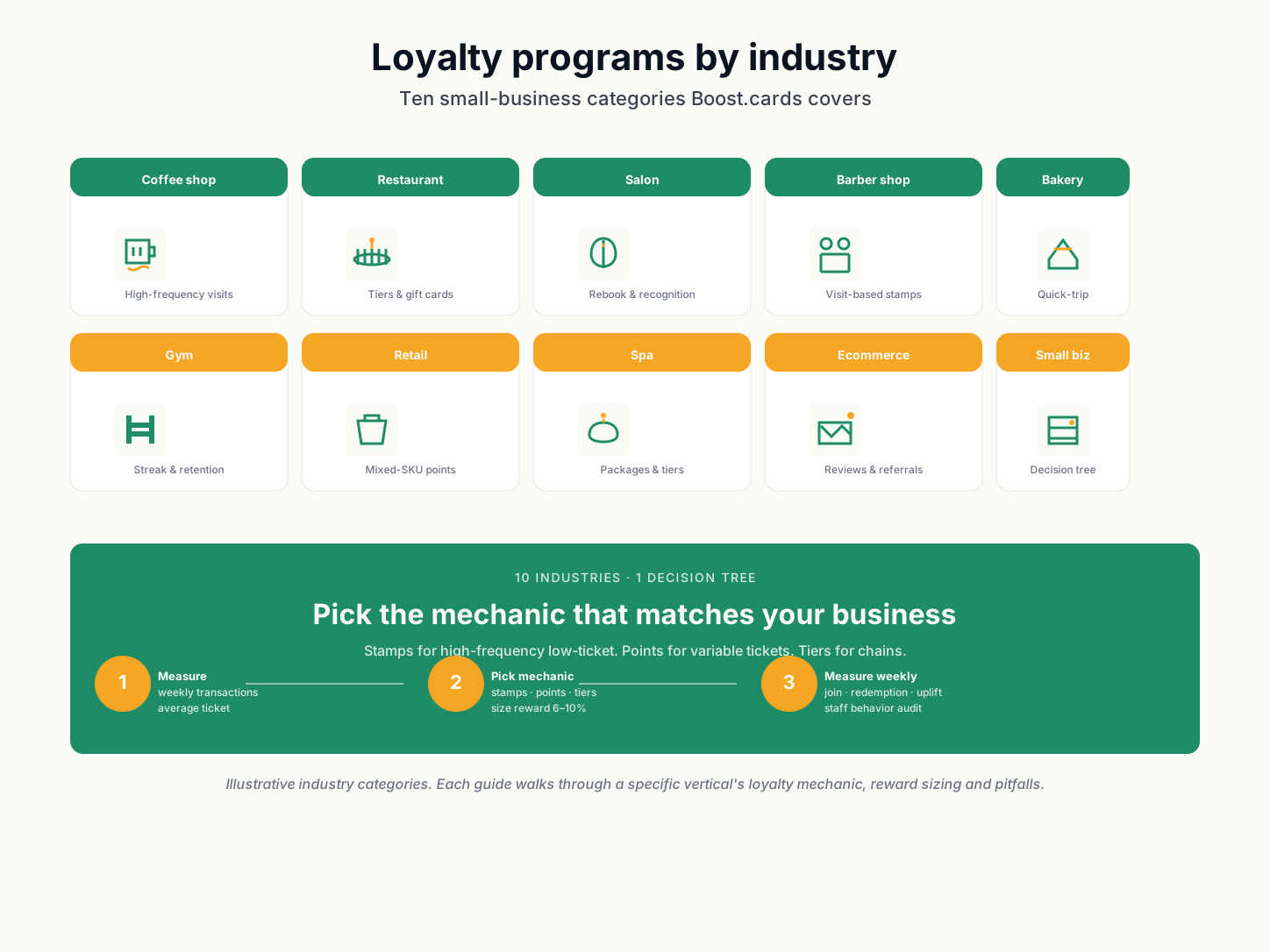
Collage of loyalty-program use cases for cafés, restaurants, salons, barbers, bakeries, gyms, retail, spas, ecommerce and small businesses.
Ten small-business loyalty use cases — illustrative.
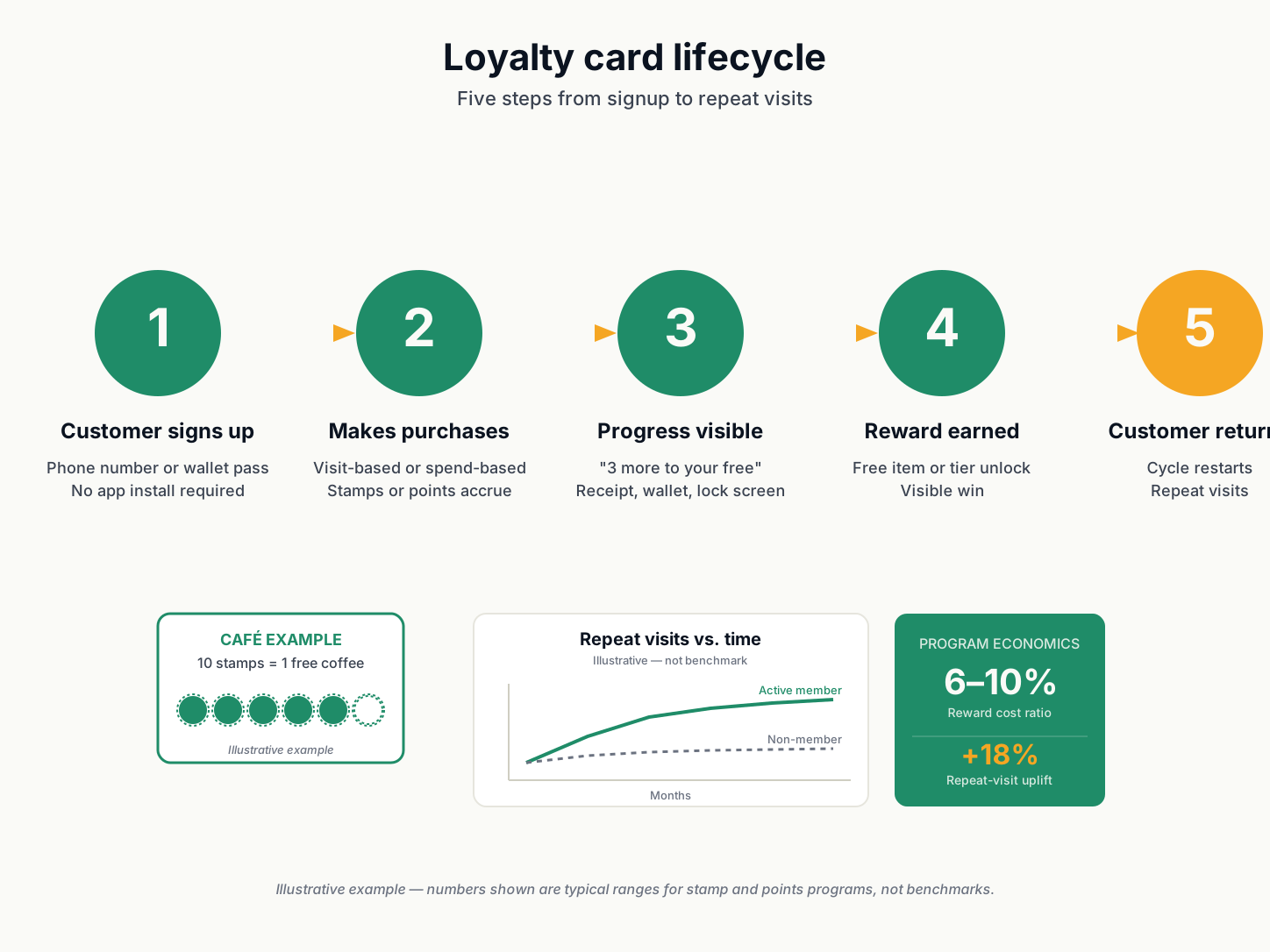
Five-step loyalty card lifecycle from customer signup and purchases to rewards and repeat visits.
Implementation workflow — illustrative.

Reward cost should be 6–10% of cumulative spend

Below 4% the reward feels stingy; above 12% the program erodes margin. Use the stamp card reward calculator to size the reward correctly.

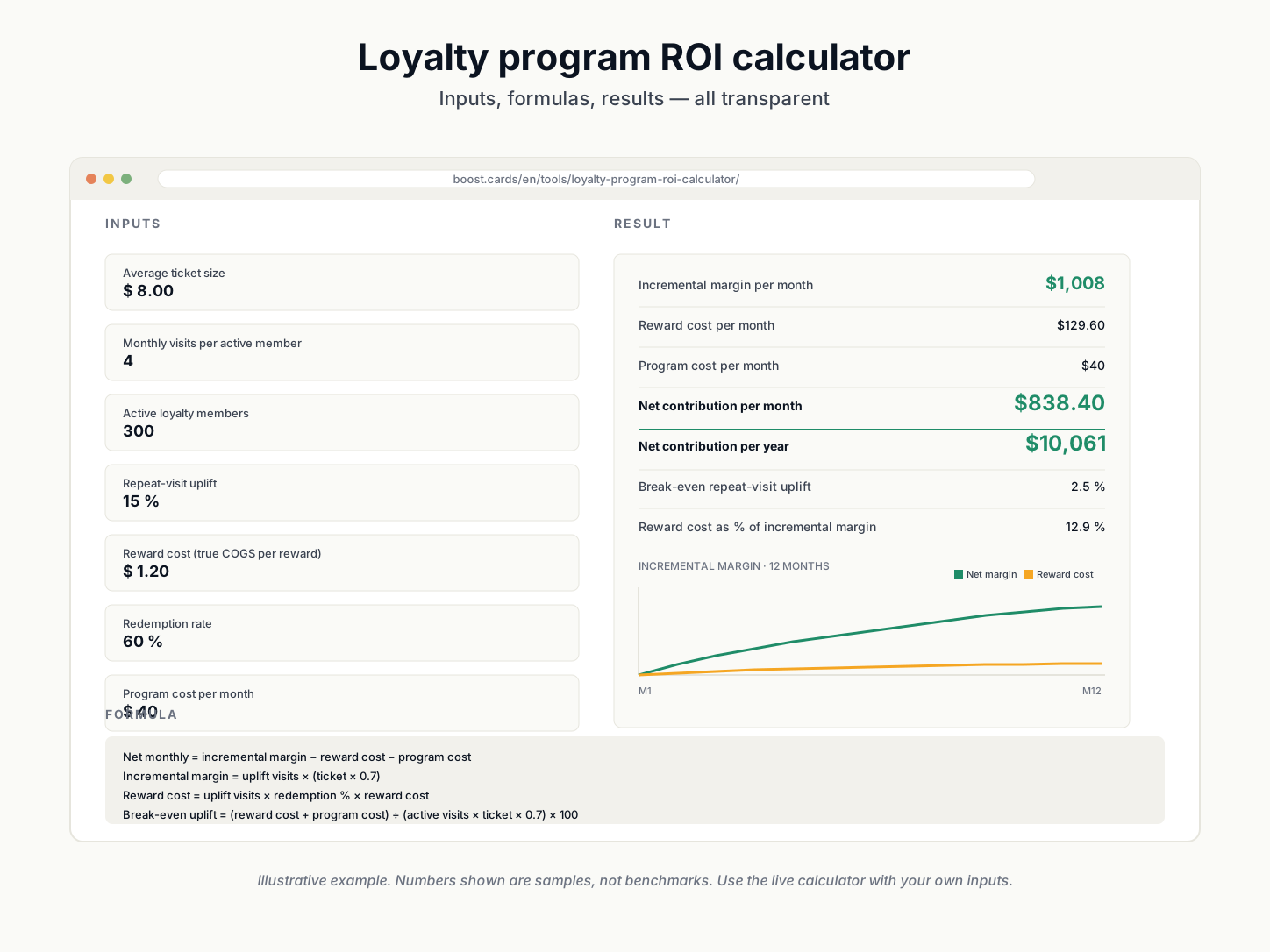
Illustrated loyalty-program ROI calculator with inputs, net contribution, break-even result and an incremental-revenue chart.
Worked ROI scenario — example calculator view.

Decide what you will measure

A loyalty program without measurement is a marketing expense. Pick three numbers to track weekly: join rate, redemption rate, and incremental visits per active member. If you cannot measure these, the program is not a loyalty program; it is a discount.

The till is the moment of truth

Most loyalty programs fail at the till, not in design. A program that takes longer than five seconds at the till is silently dropped during the busy hours. Train the staff. Test with a stranger. Re-train when staff turnover happens.

Action plan

What to do this week

Numbered so you can check steps off. Adapt to your operating reality.

  1. Measure three numbers. Weekly transactions, average ticket, contribution margin.
  2. Pick the mechanic. Use the decision tree above.
  3. Size the reward. 6–10% of cumulative spend.
  4. Choose paper or digital. Under ~200 transactions/week, paper is fine.
  5. Train the staff. 30 minutes; five-second rule.
  6. Track three numbers weekly. Join rate, redemption rate, incremental visits.

Worked examples

Sample numbers

Illustrative. Plug your own data into the calculators.

A 200-transaction/week service business

Weekly transactions
200
Average ticket
$32
Recommended mechanic
Digital wallet pass, simple points
Reward cost ratio
8%
Repeat-visit uplift
+15%
Annual program contribution
~$22,000

Illustrative. Run your own numbers with the ROI calculator.

Common pitfalls

What usually goes wrong

Imitating a competitor's program

Your volume, ticket and margin are different. Pick for your numbers.

No measurement

A program without measurement is a discount.

Slow till experience

Five-second rule. Train and re-train.

Your action plan

Three things to do next

You have the playbook. The next three actions turn the playbook into a real card program running this week.

  1. 01 · Template

    Open the Small business template

    Pre-configured for this industry — stamp count, reward copy, mechanic all set. Customize from there.

    Use this template →
  2. 02 · Calculator

    Run the Stamp card reward calculator

    Verify the math behind the playbook with your own ticket size, reward cost and visit frequency.

    Open the calculator →
  3. 03 · Guide

    Read the Loyalty cards guide

    The format-free editorial overview behind this industry guide — mechanic, reward math, till experience.

    Read the guide →