Software comparison
Best loyalty software: a transparent evaluation framework
How to evaluate loyalty-program software without paying for fake reviews. Criteria, vendor archetypes, and a self-selection tree for small and mid-sized operators.
Quick answer
Pick loyalty software by evaluating the criteria that affect your specific business — mechanic coverage, data ownership, integration depth — not by an opaque score. Shortlist three to five candidates, then trial one with a real subset of customers for 60–90 days.
Editorial note
We do not publish a ranking. This is an evaluation framework with named vendor archetypes and a decision tree. If we link to a vendor we cite a public page from their documentation, not invented test scores.
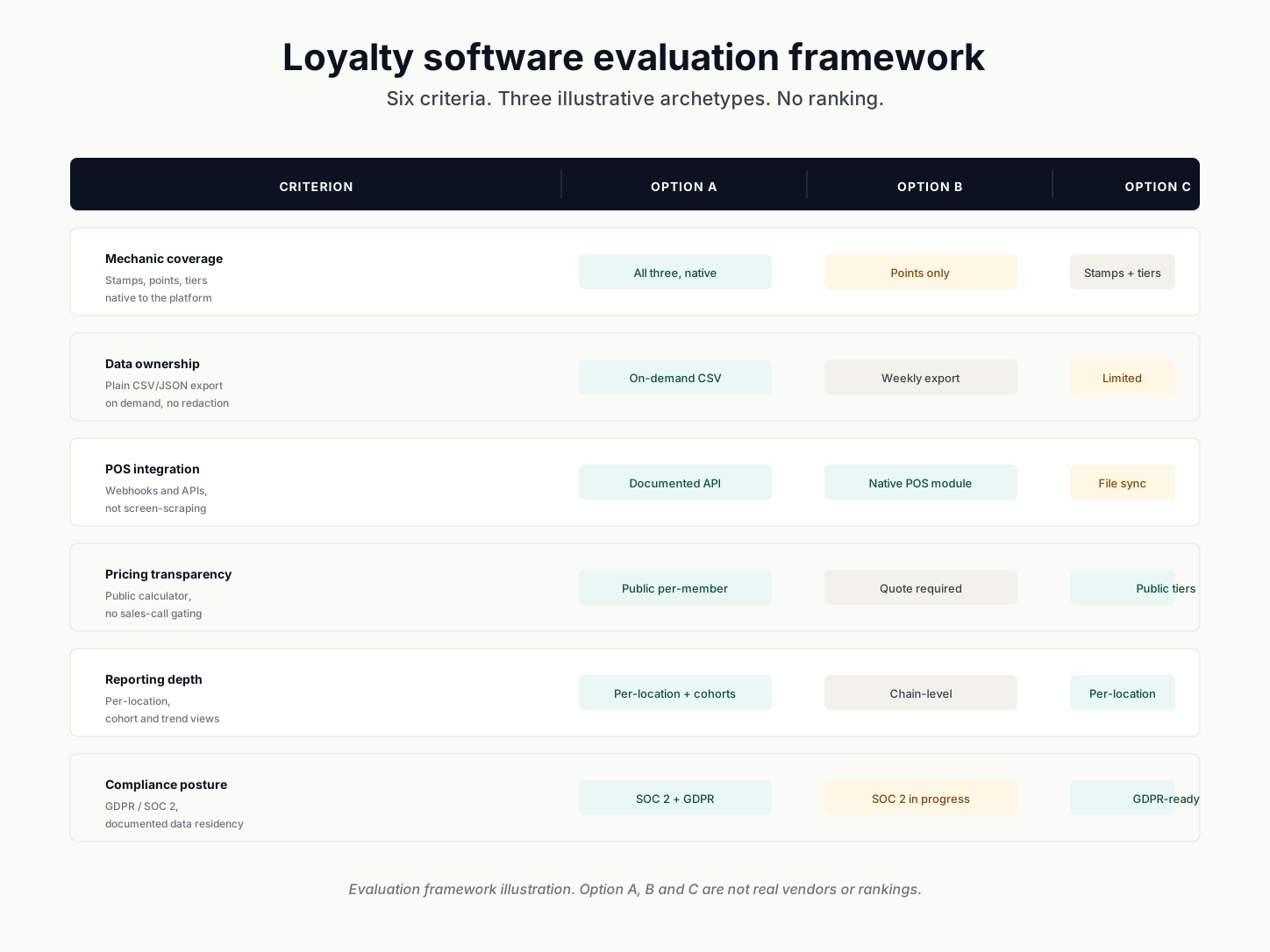
Evaluation criteria
What to compare, before you compare vendors
Use this list to weigh any vendor short-list. Adapt weights to your business model.
Mechanic coverage
high importanceNative support for stamps, points and tiers. Avoid vendors that only support one mechanic and then bolt on the others as paid add-ons.
Data ownership
high importanceYou must be able to export your full member database in plain CSV/JSON, on demand, with no redaction. If the vendor cannot guarantee this, walk away.
Per-location reporting
medium importanceFor multi-location operators: per-location program performance, including local member engagement. Avoid vendors that report only at the chain level.
Integration model
high importanceModern POS integrations via webhooks and documented APIs, not screen-scraping or one-off file syncs. Verify the integration depth, not the marketing claim.
Pricing transparency
medium importancePer-member or per-transaction pricing with public calculator. Be wary of vendors who cannot tell you the price without a sales call.
Onboarding time
medium importanceRealistic "go-live in N weeks" claim from real customers, ideally in your industry. Avoid vendors citing "weeks" as a feature rather than a cost.
Compliance posture
high importanceGDPR-ready, SOC 2 or equivalent, documented data residency. For EU operators, residency within EEA is non-negotiable.
Program flexibility
medium importanceCan the staff add or change a reward rule without engineering tickets? Bonus: customer-visible program rules configurable per tier.
Vendor archetypes
The kinds of vendors you will find, and where they fit
Archetypes are descriptive categories, not endorsements. Each archetype has trade-offs — read the criteria above first.
Specialty SMB loyalty vendors
Standalone loyalty-focused platforms built specifically for small and mid-sized businesses. Usually the best mechanic coverage at the cost of POS integration depth.
All-in-one SMB loyalty
Built for cafés, salons and small retail. Stamps + points + simple tiers; usually no POS integration beyond their own terminal.
Per-industry vertical
Tailored to a single vertical (e.g. coffee only, salons only). Strong domain features; weak fit if you run mixed services.
Best for: Businesses under ~10 locations · Operators without a complex POS stack · Quick-launch programs
POS add-ons
Loyalty modules sold by your point-of-sale vendor. Usually quick to set up but rigid on program design.
Native POS module
Sold as a paid add-on by your POS vendor. Convenient billing and single-vendor support. Limited by your POS vendor's roadmap.
Marketplace app
Installed through a POS app marketplace. Easy install but the loyalty vendor has limited ability to fix integration bugs.
Best for: Single-POS-environment businesses · Operators who already trust their POS vendor
Enterprise platforms
Built for chains. Powerful but with annual contracts, implementation costs, and minimum-vendor commitments that exclude them from most small businesses.
Enterprise SaaS
API-first, customizable, usually $50k+/yr minimum. Great for chains of 50+ locations; cost-prohibitive below.
Agency-built custom
Custom loyalty built by an integrator on top of a CRM/marketing cloud. Powerful but expensive and rarely owns its data well.
Best for: Chains of 30+ locations · Operators with engineering and data teams
DIY / spreadsheet
For very small operations: paper programs, Google Forms + Sheets, or a phone-number lookup in a Google Sheet. Real and sometimes correct.
Paper program
No software at all. Real cost: zero; real downside: zero data. Best under ~200 transactions/week with low repeat frequency.
Spreadsheet-driven
Owner-maintained Google Sheet or Airtable with a phone-number key. Real option for ~5–10 visits/day with high relationship value.
Best for: Solo operators · Side-businesses under 200 transactions/week
FAQ
Common questions
Specific, sourced answers. Send additions to the address on the contact page.
Why no "top 10" ranking?
A ranking implies we have inspected every vendor and weighted their performance. We have not. Our framework lets you short-list using criteria that matter to your business, not an opaque score.
Do you take referral fees from vendors?
If a vendor runs an affiliate program we disclose it on this page and the relevant comparison. Affiliate links do not change our editor's evaluation framework. Our editorial policy page documents the policy.
Can you recommend a specific vendor?
No — we are not a procurement service. We can help you build a shortlist using the criteria above. For procurement, a paid loyalty-program consultant or your POS reseller may be a better fit.
Tools and pillars
Pair this with the calculators and the format-free pillars
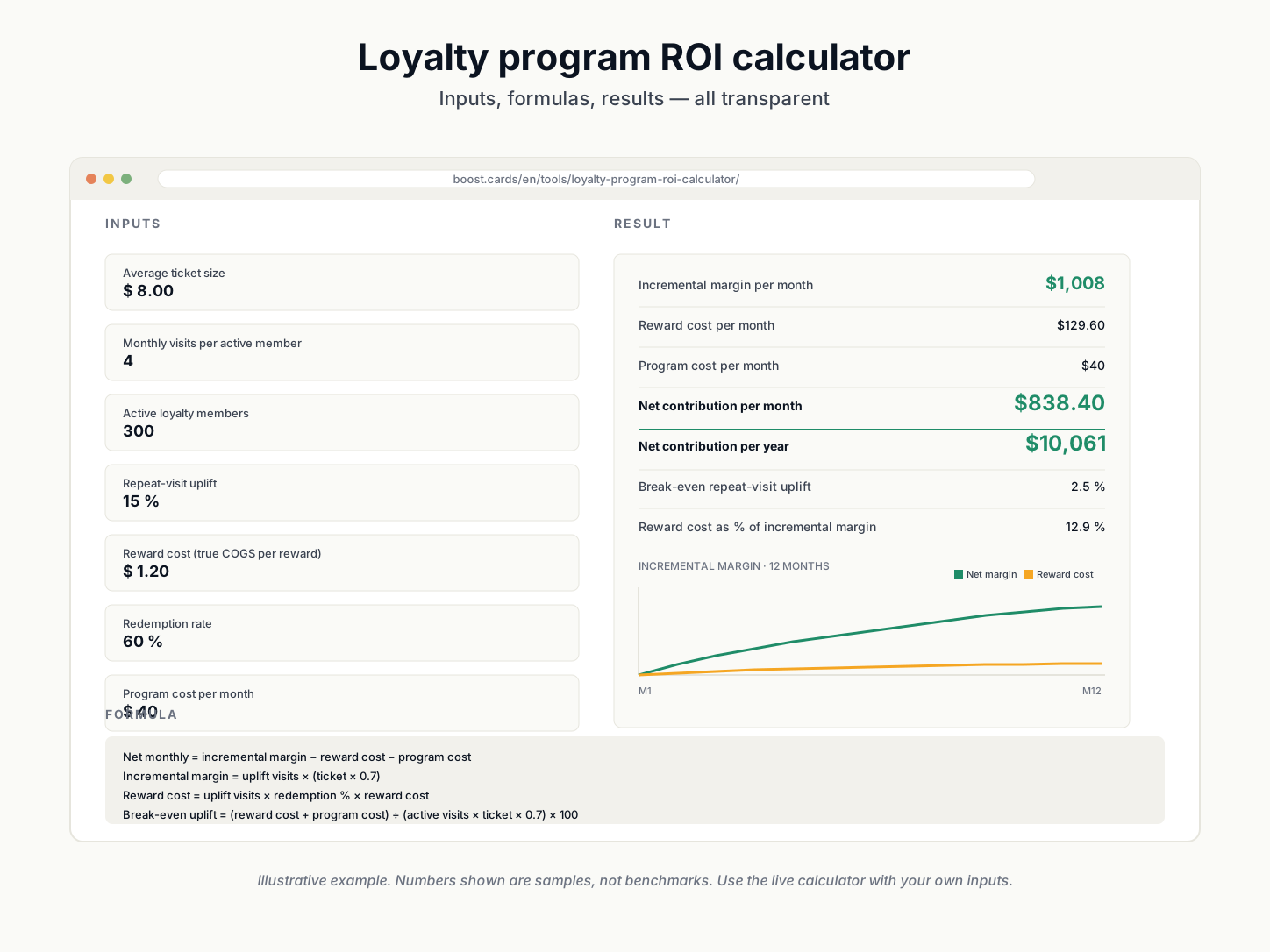
A software decision is only one part. Run the numbers, then short-list vendors.