Ecommerce stores template
Ecommerce loyalty card
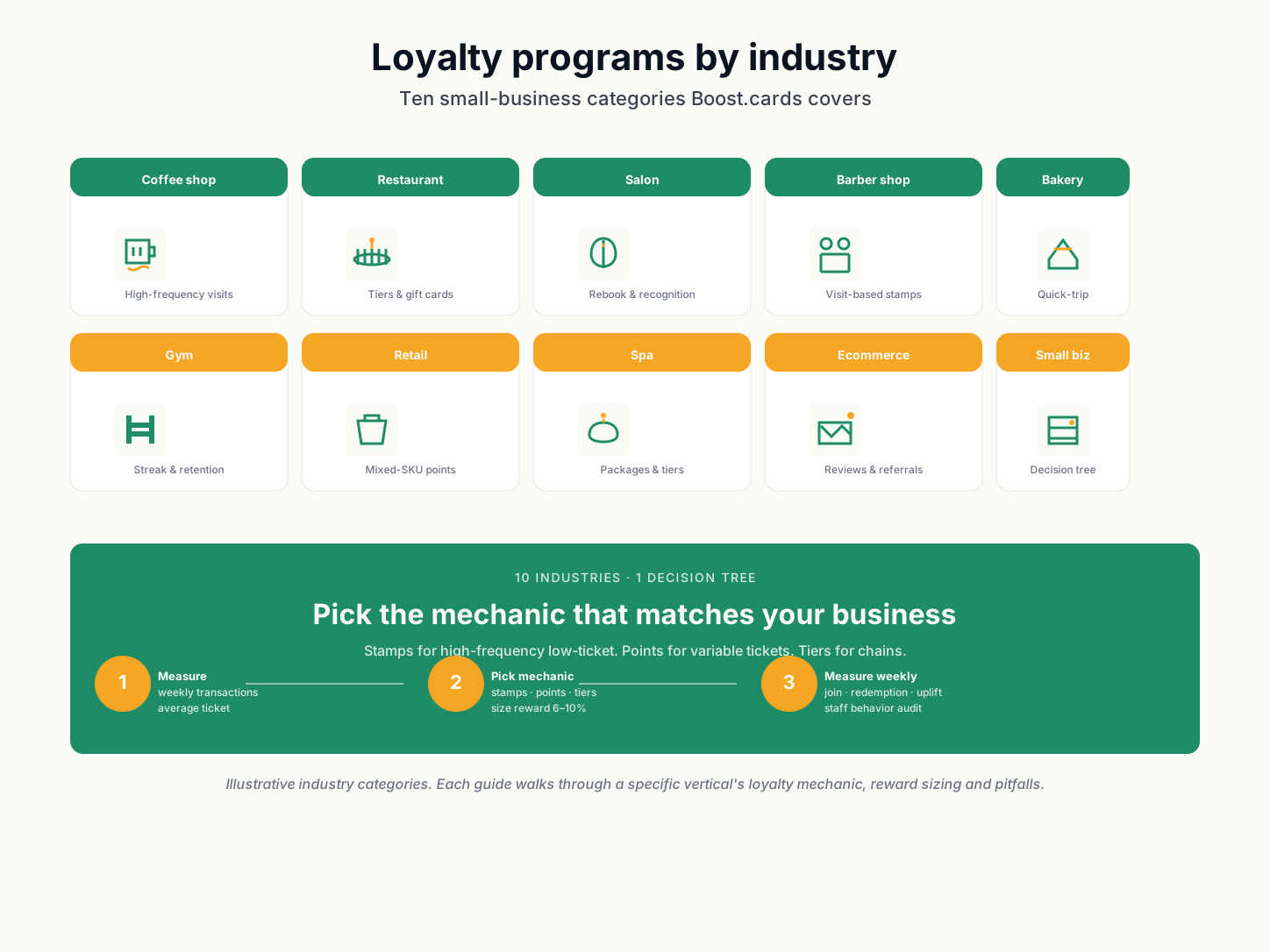
For online-first retailers, reviews and referrals are the highest-leverage retention levers. A points program rewards spend; reviews and referrals reward advocacy. The two together outperform either alone.
Mechanic
Points
Plus review + referral bonuses.
Earn rate
1 pt / $1
2nd purchase earns faster than 1st.
Highest LTV
Referrals
Reviews + referrals beat paid acquisition.
Loyalty card
Pinecrest Goods
Free shipping over $50
$10 off or free shipping
Earn 1 points per visit. 200 points = $10 off or free shipping.
Sample preview — every field is editable in the builder.
What to have ready before you customize
A loyalty card that runs at the till has to be designed around the real numbers, not the ones you wish you had. Before you start editing this ecommerce stores template, gather:
- Email-engagement baseline for members (target 2× non-members).
- A 2nd-purchase bonus — seed repeat behavior before the points math catches up.
- A review-reward mechanic (50 points for a verified review) — reviews convert at higher rates than discounts.
- A referral mechanic (200 points for a friend's first order) — highest-LTV acquisition channel.
- Tracking: email engagement, repeat-purchase rate, incremental CLV lift quarterly.
Why this works for ecommerce stores
Reviews are the highest-leverage loyalty lever for ecommerce — a verified review is more persuasive than a discount. Referral mechanics beat paid acquisition on lifetime value for small ecommerce. Tiered recognition rewards (early access, members-only product drops) work harder than blanket discounts.
How to customize it
- 1 point per $1 spent; 200 = $10 off; reward the customer's 2nd purchase faster than the 1st to seed repeat behavior.
- Pair points with a review-reward mechanic (50 points for a verified review) — reviews convert at higher rates than discounts.
- Pair points with a referral mechanic (200 points for a friend's first order) — referrals are the highest-LTV acquisition channel.
- Track email engagement among members, repeat-purchase rate, and incremental CLV lift quarterly.
Run the numbers first
Before you print the cards, run the ecommerce stores loyalty math through the loyalty ROI calculator with your real ticket size, repeat frequency and reward cost. The calculator publishes its formulas — you can verify the math, not just trust it.
Read the full guide
The full Ecommerce stores loyalty program guide walks through mechanic choice, reward sizing, the till experience, common pitfalls and how to measure whether the program is working. Read the ecommerce stores guide →
Ecommerce stores loyalty card FAQ
The questions we hear most about running a ecommerce stores loyalty card. If yours isn’t here, send it over — we add new questions from readers every month.
What is the highest-LTV retention lever for ecommerce?
Referrals. A customer referred by an existing customer has 2–3× the lifetime value of a customer acquired through paid ads. Reward referrals at a higher rate than purchases.
Should reviews be rewarded?
Yes — but verify first. A verified-purchase review reward (50 points after the review is verified) costs you less than a discount and converts at higher rates. Unverified review rewards attract spam.
How do I get the second purchase?
Reward it explicitly. The 2nd-purchase bonus (e.g. 100 points on the 2nd order, regardless of size) is the highest-ROI mechanic in early-stage ecommerce. The first purchase is acquisition; the second is retention.
Should I tier the program?
Yes — but keep the tiers simple (e.g. Member / Insider). Tiered recognition (early access, members-only product drops) works harder than blanket discounts and doesn't erode margin.
Related templates
All templates →Retail stores
Retail loyalty card
For multi-SKU retail, points-based programs handle the catalog naturally. Channel-aware rewards (in-store + online + app) differentiate your program from competitors.
Use template →
Small businesses
Small business loyalty card
For small businesses that don't fit a single vertical, pick by three numbers: ticket size, repeat-visit frequency, and reward cost. The decision tree is short — there's usually one right answer.
Use template →