Restaurants guide

Restaurant loyalty program

A step-by-step guide for full-service and fast-casual restaurants: mechanic choice, off-peak incentives, birthday mechanics, and the holiday gift card season.

8 min readLast verified 2026-09-22Updated

Quick answer

Full-service restaurants do best with spend-based points and tiered recognition. Fast-casual restaurants do best with stamps or simple points. Off-peak time-slot rewards shift demand without cannibalizing peak nights. Birthday rewards are cheap and effective.

Illustrative numbers

+12%

off-peak lift from time-slot rewards

6–10%

birthday reward redemption rate

8–15%

gift cards as % of annual revenue (Nov–Dec)

Pick the mechanic for your service style

Full-service restaurants profit most from a points-and-tier program tied to spend, not visits. The mechanic reflects ticket-size variation: a $14 lunch and a $120 dinner party should both move the needle. Stamps are wrong because they treat every visit equally.

Fast-casual restaurants with average tickets $9–$15 profit most from a stamp card or simple points. The mechanic has to move at line speed.

  • Full-service → points-based, 1 point per $1, with named tiers (e.g. regular, regular+, regular++) and birthday perks.
  • Fast-casual → 10-stamp card or simple points, 1 per $1, redeemed for rewards.
  • Hybrid → paper stamps for in-store customers, digital pass for the online-order segment.
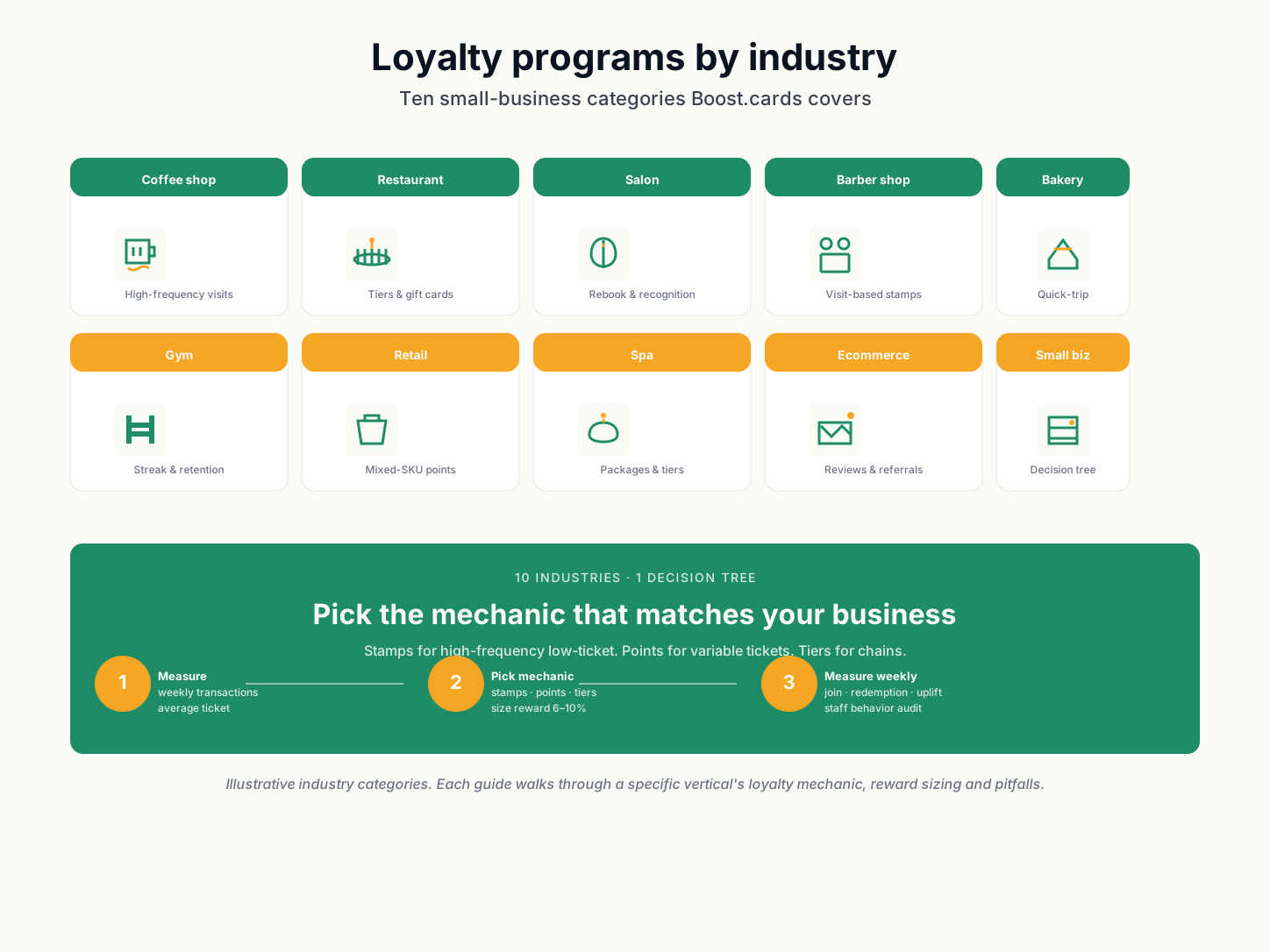
Collage of loyalty-program use cases for cafés, restaurants, salons, barbers, bakeries, gyms, retail, spas, ecommerce and small businesses.
Restaurant loyalty programs in context — illustrative industry example.
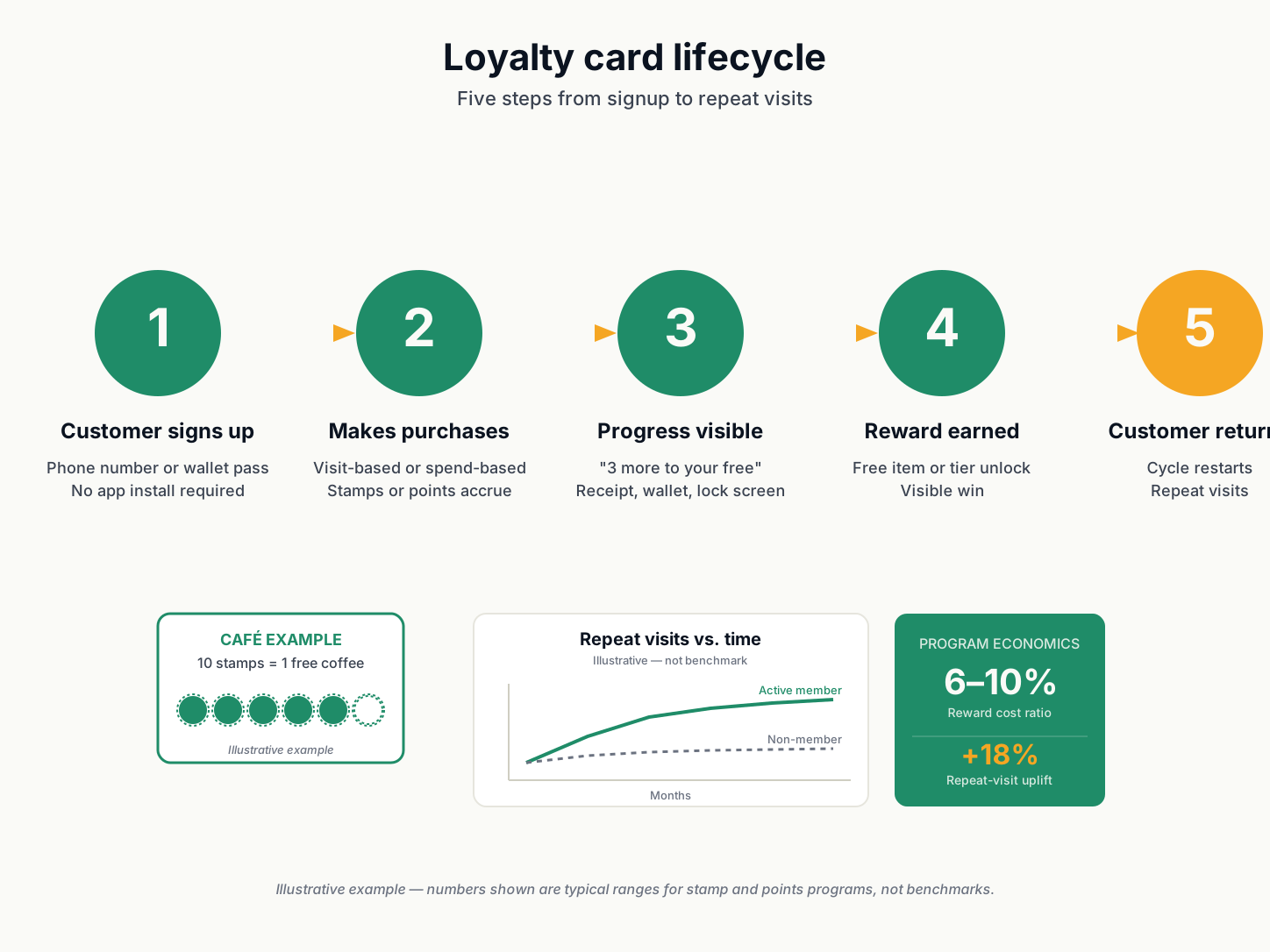
Five-step loyalty card lifecycle from customer signup and purchases to rewards and repeat visits.
Repeat-visit loyalty workflow — illustrative.

Use the program to fill off-peak seats

The most profitable loyalty programs in restaurants are off-peak fill programs, not "every visit gets a free appetizer" programs. A 2-for-1 reward redeemable Monday–Thursday shifts demand without cannibalizing Friday/Saturday.

Structure rewards by time slot. A free dessert Monday–Thursday does not entice Friday diners; that's the point. You want the customers who would otherwise stay home.

Birthdays and anniversaries do real work

A birthday reward that requires a one-day-valid email redemption drives a 6–10% redemption lift in the week. The marketing cost is $3–$7 per redemption; the visit that day usually runs 30–50% above average ticket. Net positive, and the operational cost is zero.

The holiday gift card season is your biggest spike

November–December gift card sales for independent restaurants commonly reach 8–15% of annual gift card revenue. Plan capacity: staff extra on the days you expect redemptions (last week of December, two weeks after New Year's).

Maintain the liability. Reconcile weekly. Switch platforms if the reconciliation labor exceeds 2 hours per week.

Action plan

What to do this week

Numbered so you can check steps off. Adapt to your operating reality.

  1. Pick a mechanic. Points-and-tier for full-service; stamps or simple points for fast-casual.
  2. Configure tier rewards. Avoid "10% off" tiers. Use recognition: priority seating, complimentary dessert, occasional chef's choice.
  3. Set up off-peak incentives. Time-slotted rewards drive demand where you want it.
  4. Capture birthdays. A simple email field at signup. One-day-only reward at the right time drives a real visit.
  5. Plan holiday gift cards. Capacity for redemption weeks, not just sale weeks.

Worked examples

Sample numbers

Illustrative. Plug your own data into the calculators.

A 90-seat full-service restaurant

Covers per day
180
Average ticket
$42
Members after 6 months
1,400
Tiers
Regular / Patron (500 pts) / Family (2,000 pts)
Off-peak lift (Mon-Thu lunch)
+12%
Net annual contribution
~$58,000

Illustrative. Real numbers depend on cuisine mix and local market.

Common pitfalls

What usually goes wrong

10% off tier reward

Discounts become expected, then eroding. Use recognition instead.

Treating off-peak fill as panic

Plan the program; do not run periodic "deals". Plan capacity for the redemption weeks too.

Email-only redemption

Customers rarely convert on email-only. Use SMS with permission and a clear opt-out at signup.

Your action plan

Three things to do next

You have the playbook. The next three actions turn the playbook into a real card program running this week.

  1. 01 · Template

    Open the Restaurant template

    Pre-configured for this industry — stamp count, reward copy, mechanic all set. Customize from there.

    Use this template →
  2. 02 · Calculator

    Run the Loyalty ROI calculator

    Verify the math behind the playbook with your own ticket size, reward cost and visit frequency.

    Open the calculator →
  3. 03 · Guide

    Read the Loyalty cards guide

    The format-free editorial overview behind this industry guide — mechanic, reward math, till experience.

    Read the guide →