Coffee guide

Coffee shop loyalty program

A step-by-step guide to choosing, launching and measuring a loyalty program that pays for itself in a 100–500 cups/day coffee shop.

9 min readLast verified 2026-09-22Updated

Quick answer

For most coffee shops, a 10-stamp free-regular-mechanic on paper or a wallet pass delivers the highest participation at the lowest operating cost. Avoid discounts. Train the baristas. Show progress visibly. Pair with a holiday gift card program.

Illustrative numbers

6–10%

reward cost ratio target

+18%

typical repeat-visit uplift

~5 sec

max staff time per stamp

Pick the mechanic first

Most coffee shops under ~500 cups/day do best with a 10-stamp "every 10th coffee free" card. The mechanic is dead simple, the reward is tangible, the redemption math is easy to communicate at the till, and the program can be run on paper or in a wallet pass. Points and tiers win above that volume or when the business also sells retail, beans or food.

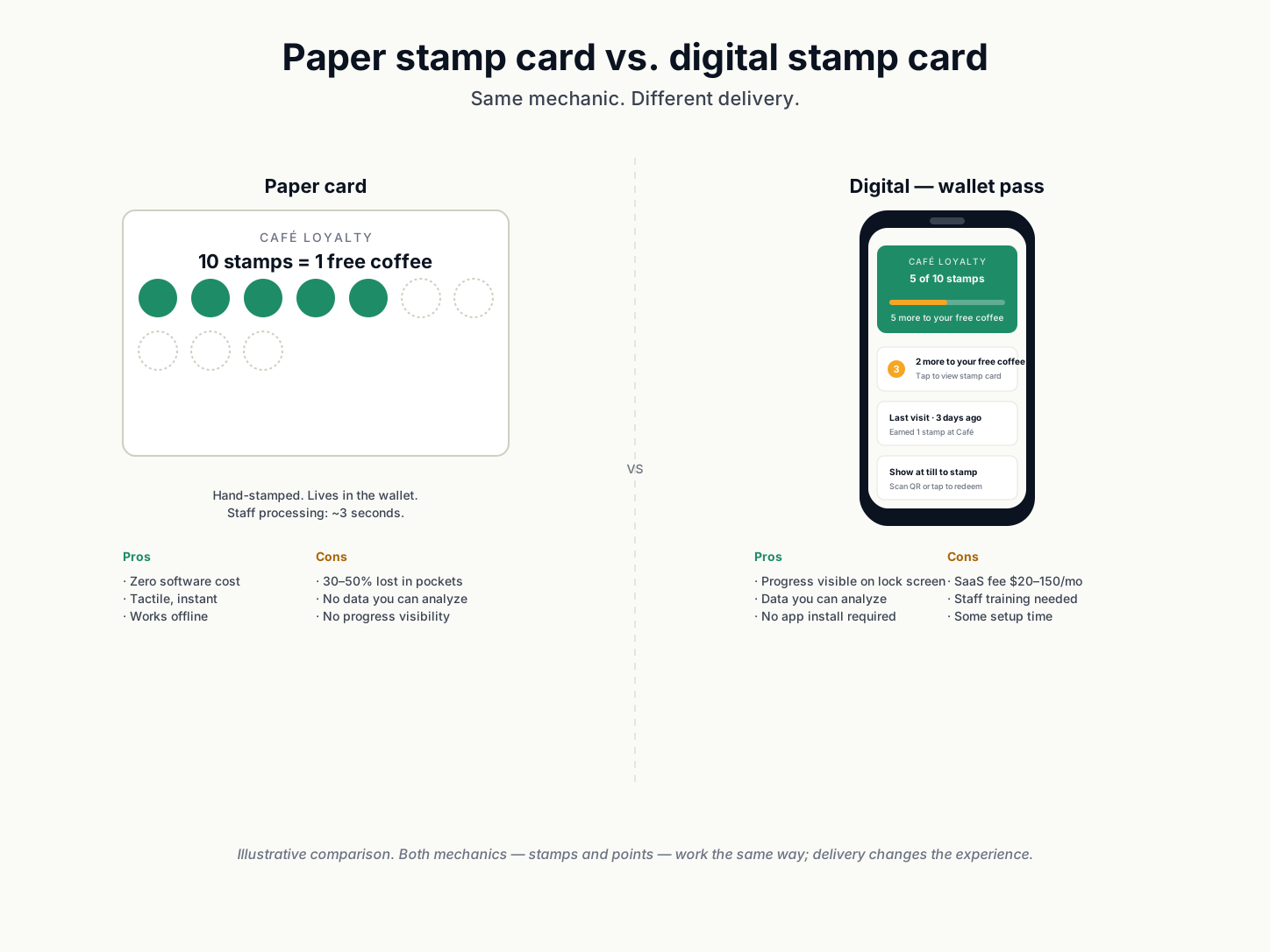
Below ~200 cups/day, paper is genuinely fine. Above that, a digital pass becomes worth it because the redemption-loss rate on paper cards (cards lost in pockets, washed in jeans, left at home) eats 20–35% of redemptions.

  • Under 200 cups/day → paper stamp card or wallet pass with simple 10th-free mechanic.
  • 200–800 cups/day → digital wallet pass is the default; paper as a backup.
  • Above 800 cups/day, multi-location, or with subscription-style products (beans, milk) → points program with simple tiers.
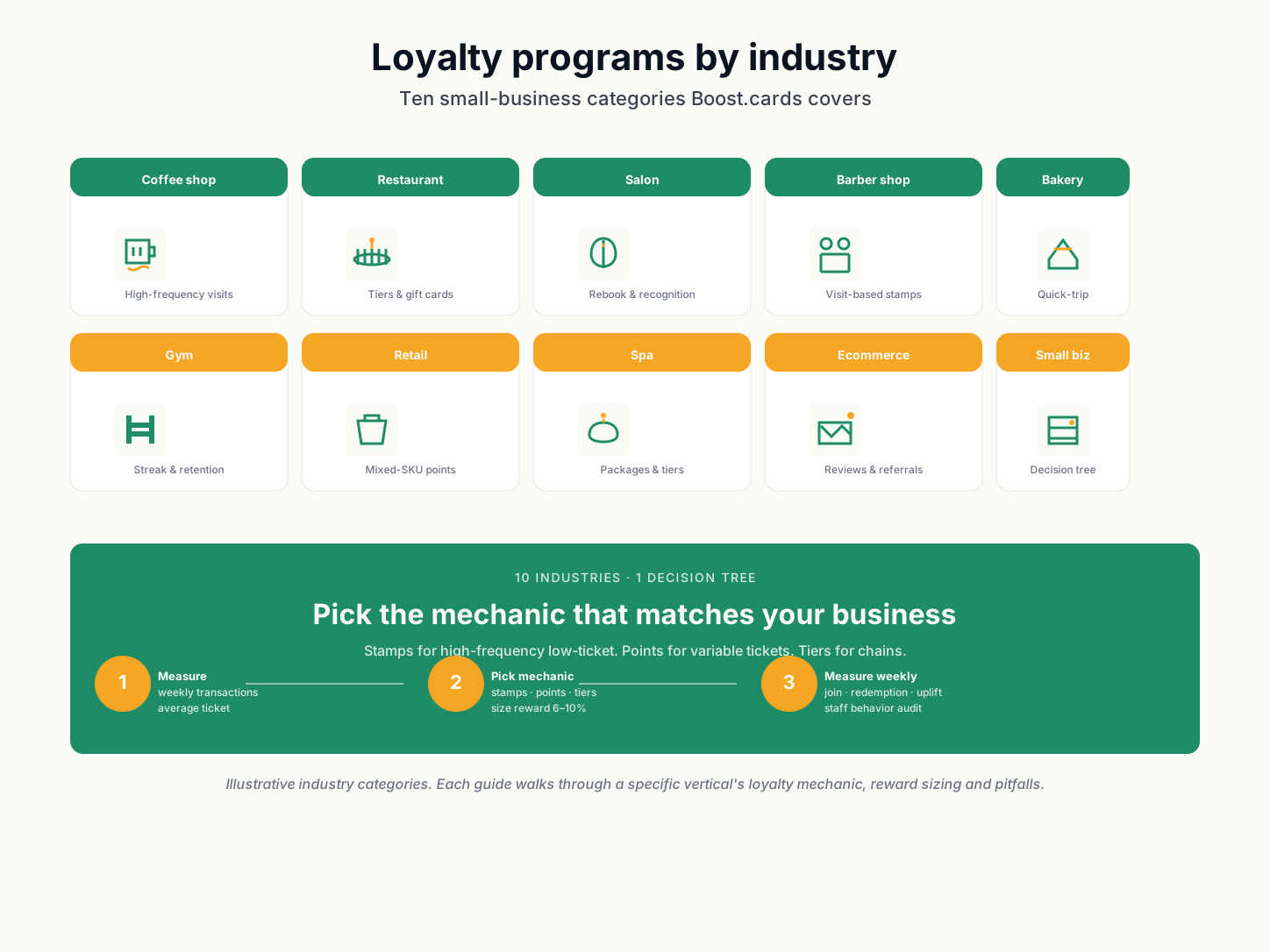
Collage of loyalty-program use cases for cafés, restaurants, salons, barbers, bakeries, gyms, retail, spas, ecommerce and small businesses.
Coffee-shop loyalty programs in context — illustrative industry example.
Comparison of a traditional paper stamp card and a digital stamp card on a smartphone.
Paper stamp card versus digital stamp card — illustrative.

Size the reward correctly

The right reward is a free REGULAR coffee, not a free everything. A freebie that maps to your highest-volume SKU controls reward cost while giving customers a memorable win. Free pastries inflate cost without raising visit frequency meaningfully.

Aim for reward cost at 6–10% of cumulative spend. If you sell mostly regulars at $5 with a free regular costing ~$1.20 in COGS, a 10-stamp card clears that bar.

Design the till experience

The biggest loyalty-failure mode at the till is friction. A stamp or scan must take less than five seconds; otherwise baristas will silently drop the program during the morning rush. Train, then test: have a stranger order ten coffees and time the program touch.

Show progress visibly. A printed reminder on the receipt ("2 more to your free coffee") is the single highest-ROI upgrade a coffee shop can make.

Pair with a gift card for the holiday season

Gift cards for coffee shops spike heavily in November and December. The unit economics are good: a $25 gift card typically redeems $22 over its lifetime, with $3 breakage. The customer who receives the gift card and was not previously a regular becomes one with ~30–40% probability.

Treat the program as a liability. Reconcile outstanding balances monthly. Most small coffee shops use a SaaS platform — see the gift card platforms comparison.

What usually goes wrong

The most common coffee shop loyalty failure is launching a discount-based program ("10% off your next visit"). Discounts teach price-sensitivity instead of habit. A free item teaches recognition. Discount programs erode margin; free-item programs reinforce identity.

The second most common failure: launching without training. If baristas do not stamp or scan, the program does not exist in the customer's mind. A 30-minute training session before launch and a 90-day monitoring period after launch makes the program real.

How to know it is working

Track three numbers weekly: program join rate (sign-ups per week), redemption rate (free rewards claimed per 100 active members), and incremental visits per active member. If redemption rate is below 50% after 90 days the program is invisible to half your participants — usually a sign the staff is forgetting to stamp.

A real coffee shop program sees join rates of 5–15% of unique monthly customers within the first three months. Year-over-year repeat-visit frequency among active members should rise 12–25%. If your numbers underperform, the issue is awareness or staff behavior, not the program design.

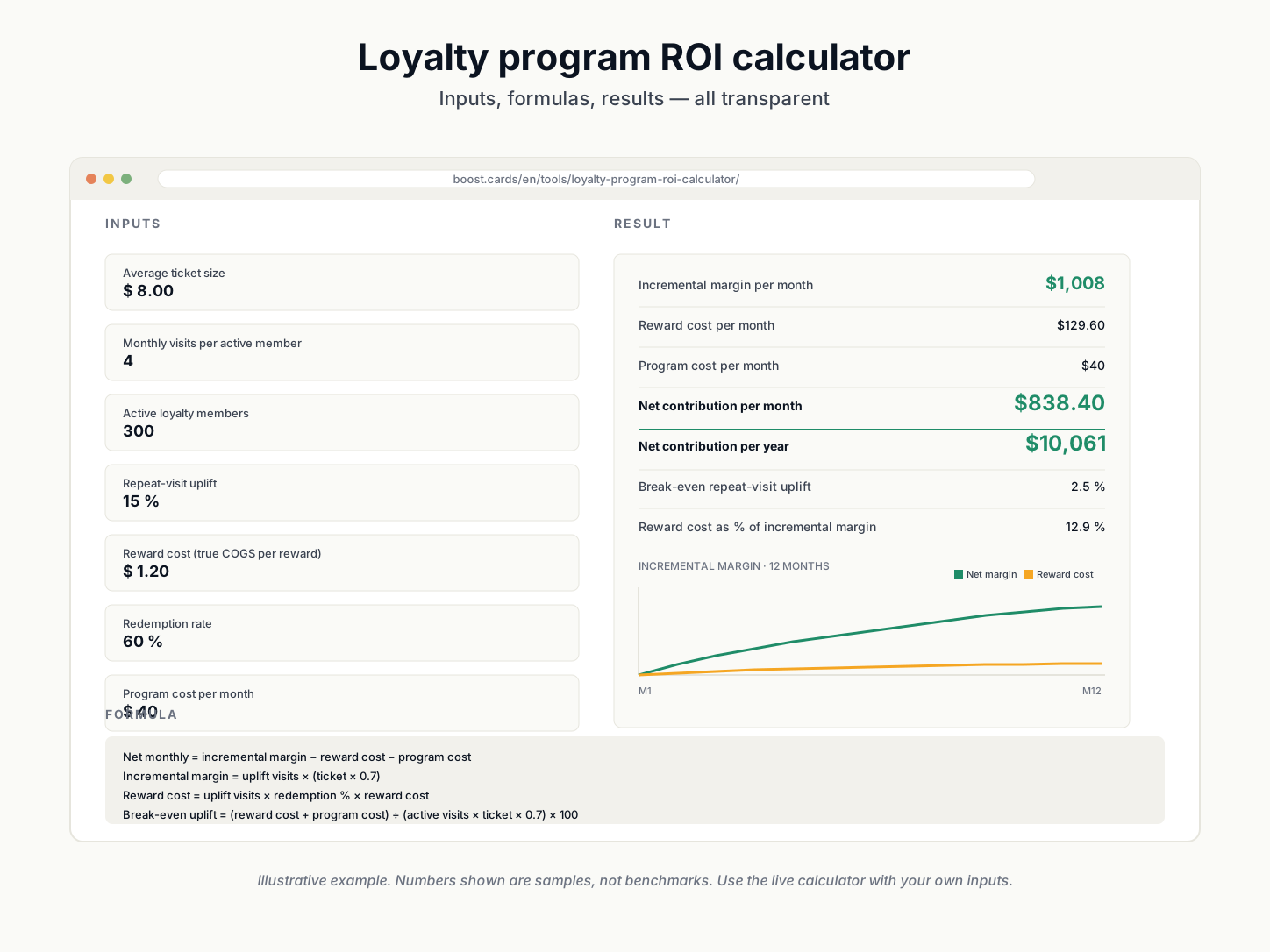
Illustrated loyalty-program ROI calculator with inputs, net contribution, break-even result and an incremental-revenue chart.
Example ROI calculator view; use the live tool for your numbers.

Action plan

What to do this week

Numbered so you can check steps off. Adapt to your operating reality.

  1. Choose your mechanic. Paper stamp card, digital wallet pass, or points — based on volume. The simpler the better.
  2. Pick a reward. Free REGULAR. Not free everything. Aim for 6–10% of cumulative spend.
  3. Print or generate your card. Paper card on heavy stock, OR a digital wallet pass with a unique QR.
  4. Train the staff. 30 minutes before launch. The stamp must take under five seconds.
  5. Launch the program. Tell every regular who walks in for the first 14 days. Word of mouth does the rest.
  6. Add the wallet pass at week 2. Once paper is humming, layer a digital pass as an opt-in upgrade for the phone-first customers.
  7. Track three numbers weekly. Join rate, redemption rate, incremental visits per active member.

Worked examples

Sample numbers

Illustrative. Plug your own data into the calculators.

A 200-cups/day coffee shop

Daily tickets
200
Average ticket
$5
Active members (target 6 months)
600
Reward cost ratio
7% of spend
Repeat-visit uplift
+18%
Net annual contribution
~$21,000

Illustrative. Real numbers depend on local market and existing visit frequency.

Common pitfalls

What usually goes wrong

Discount-based program

Teaches price-sensitivity, erodes margin. Use free items instead.

Forgetting to train

Programs fail at the till, not on paper. Train, then test with a stranger.

Invisible progress

If customers cannot see how close they are, they do not return sooner. Show progress on the receipt or wallet pass.

Reward too generous

Free everything destroys margin. Free regular keeps math intact.

Your action plan

Three things to do next

You have the playbook. The next three actions turn the playbook into a real card program running this week.

  1. 01 · Template

    Open the Coffee shop template

    Pre-configured for this industry — stamp count, reward copy, mechanic all set. Customize from there.

    Use this template →
  2. 02 · Calculator

    Run the Loyalty ROI calculator

    Verify the math behind the playbook with your own ticket size, reward cost and visit frequency.

    Open the calculator →
  3. 03 · Guide

    Read the Loyalty cards guide

    The format-free editorial overview behind this industry guide — mechanic, reward math, till experience.

    Read the guide →