Retail guide

Retail loyalty program

How to design and run a points-with-tiers loyalty program for small and mid-sized retail. Channel-aware rewards, recognition tiers, referral mechanics.

7 min readLast verified 2026-09-22Updated

Quick answer

Small retailers do best with points and named tiers that span all channels. Upper tiers earn recognition (early access, free delivery, concierge returns) — not raw discounts. Add a referral mechanic.

Choose by SKU count, not by industry

A clothing boutique with 200 SKUs is a different problem from a shop with 5,000 SKUs. The mechanic choice follows: stamps work when the cart is one or two items, points when the cart is varied.

For most small retailers, points with named tiers is the right default. It maps cleanly to the variable cart, lets the customer see progress, and supports tier recognition without forcing a separate program for VIP customers.
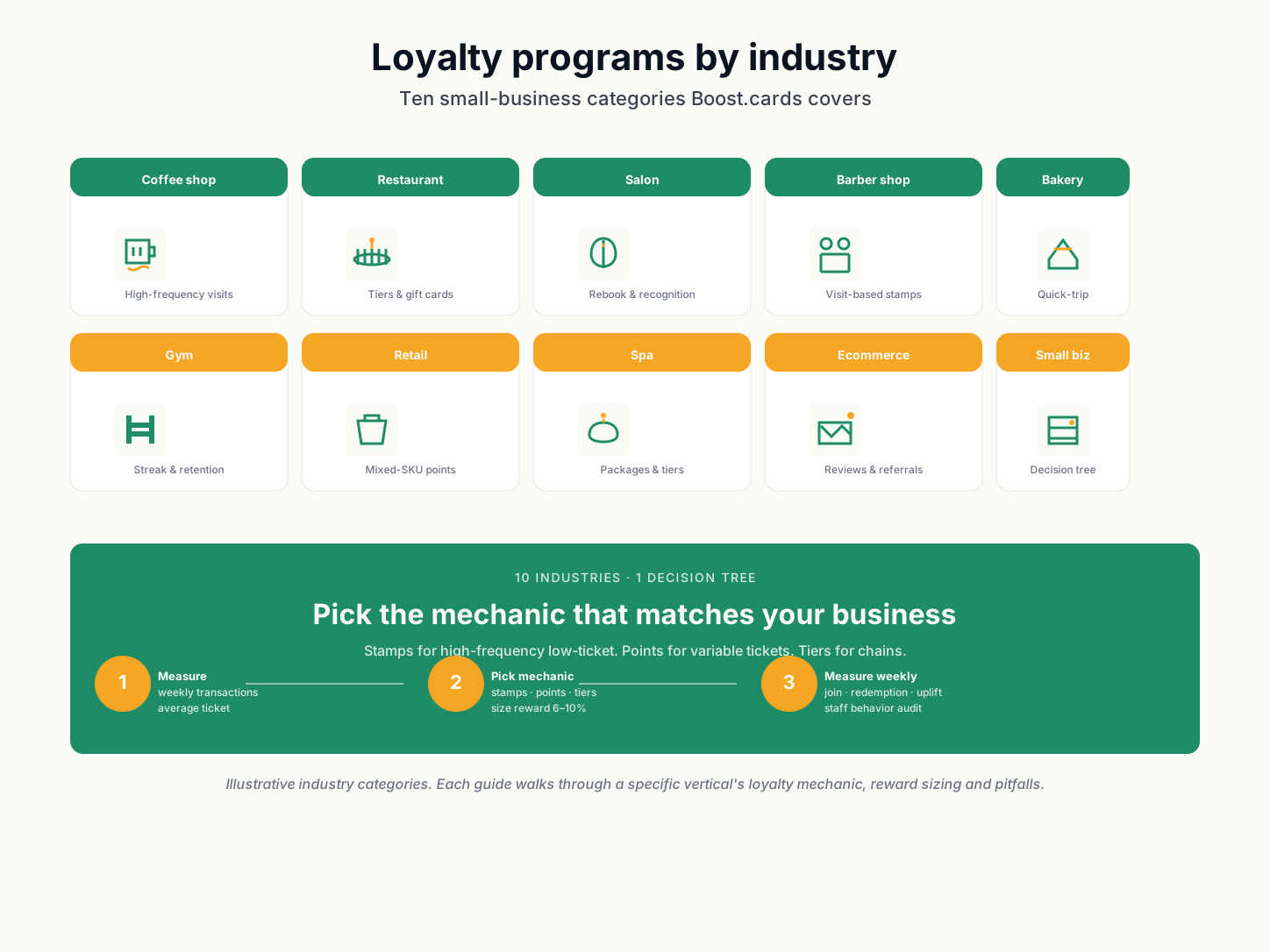
Collage of loyalty-program use cases for cafés, restaurants, salons, barbers, bakeries, gyms, retail, spas, ecommerce and small businesses.
Retail loyalty programs in context — illustrative industry example.

Tiers work when recognition is real

Tiers only work when there is a meaningful difference between them. "10% off" is not meaningful; "early access to new arrivals" or "free local delivery" is meaningful. Reserve the top tier for the 5–10% of customers who drive 25–40% of revenue and design the tier around recognition, not discount.

Channel-aware rewards are the differentiator

A modern retail customer buys in three to five channels: in-store, online, mobile app, marketplace, and possibly a third-party delivery platform. The loyalty program should reward total spend across channels, not just one. If it does not, the customer optimizes to the un-rewarded channel.

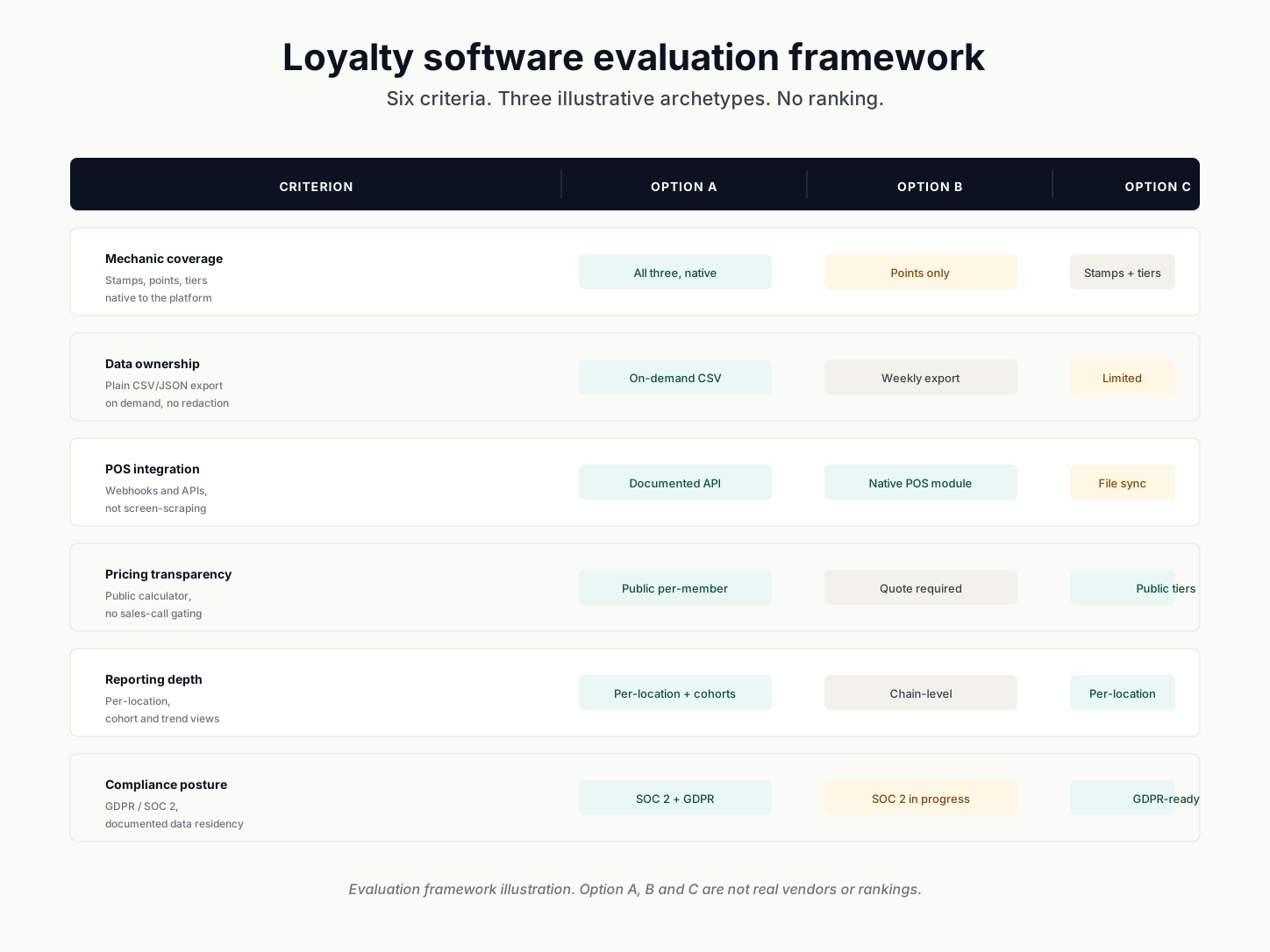
Loyalty software evaluation framework comparing mechanic coverage, data ownership, POS integration, pricing transparency, reporting and compliance.
Multi-channel loyalty software evaluation framework — illustrative, not a ranking.

Referral mechanics beat paid acquisition

Referred customers have 3–5x higher lifetime value than paid-acquisition customers. A "give $10, get $10" referral mechanic, properly capped and well-instrumented, usually beats the same marketing budget in Google or Meta.

Action plan

What to do this week

Numbered so you can check steps off. Adapt to your operating reality.

  1. Map your catalog. SKU count, average price points, repeat-purchase cadence.
  2. Pick points with named tiers. Points in the small-to-mid retailer case. Stamps if you are a single-product shop.
  3. Design tiers around recognition. Early access, free delivery, concierge returns. Avoid raw discounts.
  4. Make the program channel-aware. Reward total spend regardless of where the purchase happened.
  5. Add a referral mechanic. Give $10 / get $10, capped, with anti-abuse rules.

Worked examples

Sample numbers

Illustrative. Plug your own data into the calculators.

A 4-store clothing boutique chain

Stores
4
Average ticket
$68
Members after 12 months
6,200
Top tier (5%)
310 customers
Repeat-visit uplift (active members)
+22%
Annual program contribution
~$95,000

Illustrative. The number is sensitive to channel mix and baseline retention.

Common pitfalls

What usually goes wrong

In-store-only program

Customers buy across channels. Unrewarded channels become the dominant channel.

Discount tiers

Tiers with discount-only rewards become expected. Use recognition rewards in upper tiers.

No referral mechanic

Referrals are 3–5x more valuable than paid acquisition. A simple give/get mechanic usually beats a paid ad.

Your action plan

Three things to do next

You have the playbook. The next three actions turn the playbook into a real card program running this week.

  1. 01 · Template

    Open the Retail template

    Pre-configured for this industry — stamp count, reward copy, mechanic all set. Customize from there.

    Use this template →
  2. 02 · Calculator

    Run the Loyalty ROI calculator

    Verify the math behind the playbook with your own ticket size, reward cost and visit frequency.

    Open the calculator →
  3. 03 · Guide

    Read the Loyalty cards guide

    The format-free editorial overview behind this industry guide — mechanic, reward math, till experience.

    Read the guide →